From a First Build to Industry Firsts: QL Machinery and Heilan, More Than Thirty Years Together
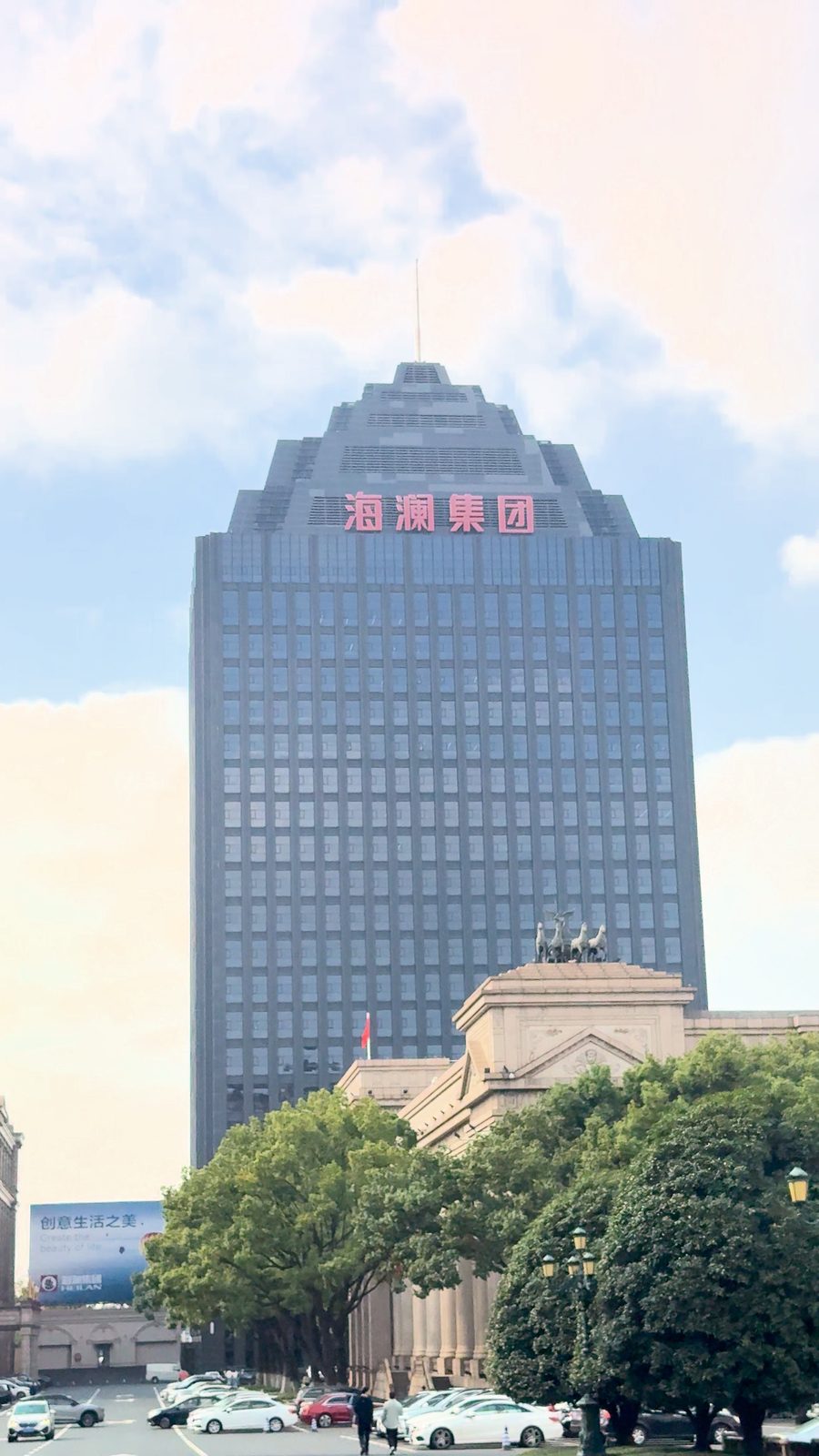
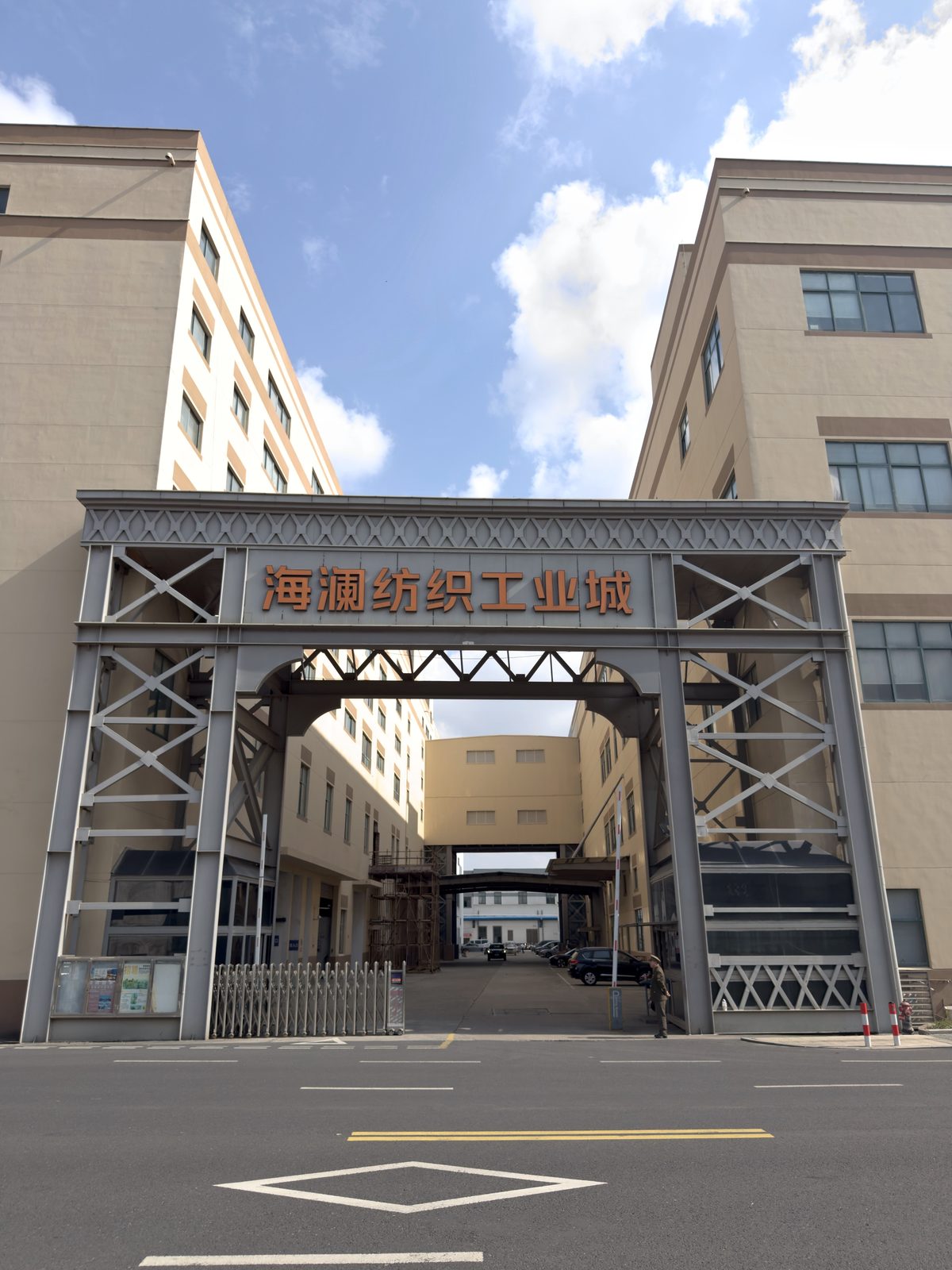
From Jiangyin No. 3 Worsted Mill to Heilan today, more than thirty years of working together are written into successive generations of QL machinery.
, at Heilan.
QL Machinery’s General Manager, Wei Shen, built his first machine after graduation by hand in 1993: a twin-bath crabbing machine.
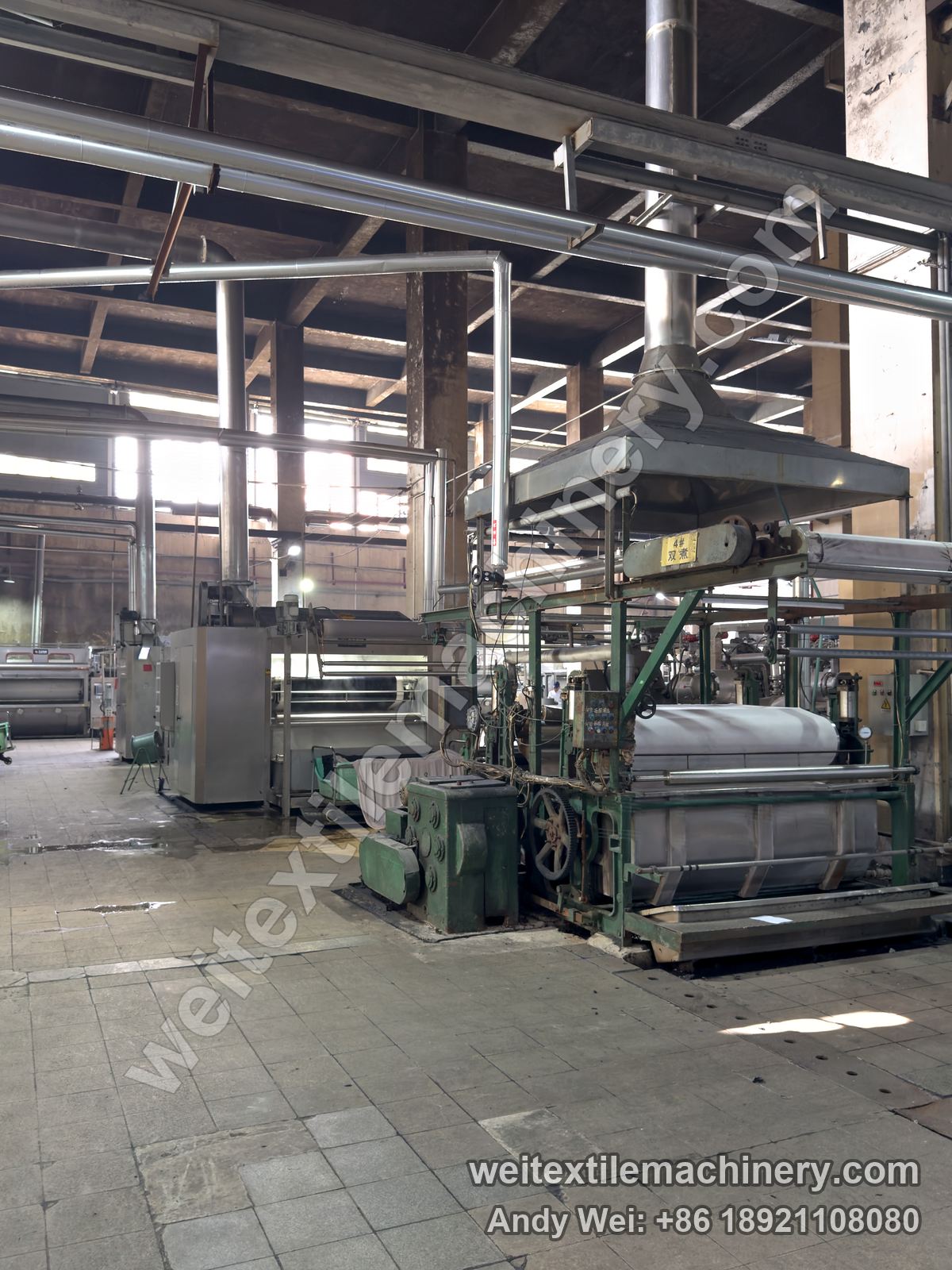
In the same year, we built China’s first dual-inverter high-efficiency decatizing machine, the WPF-900, and delivered it to what was then Jiangyin No. 3 Worsted Mill.
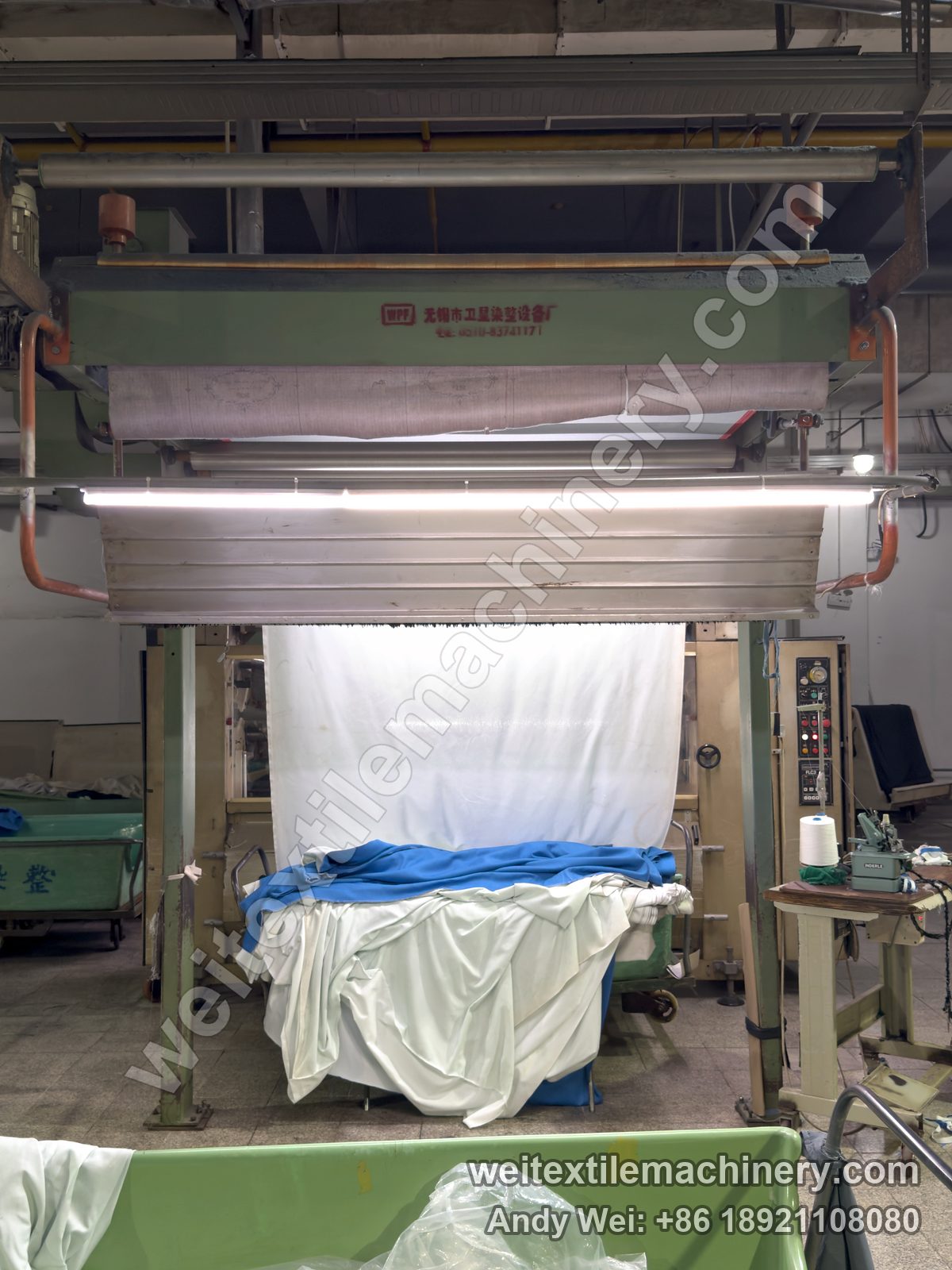
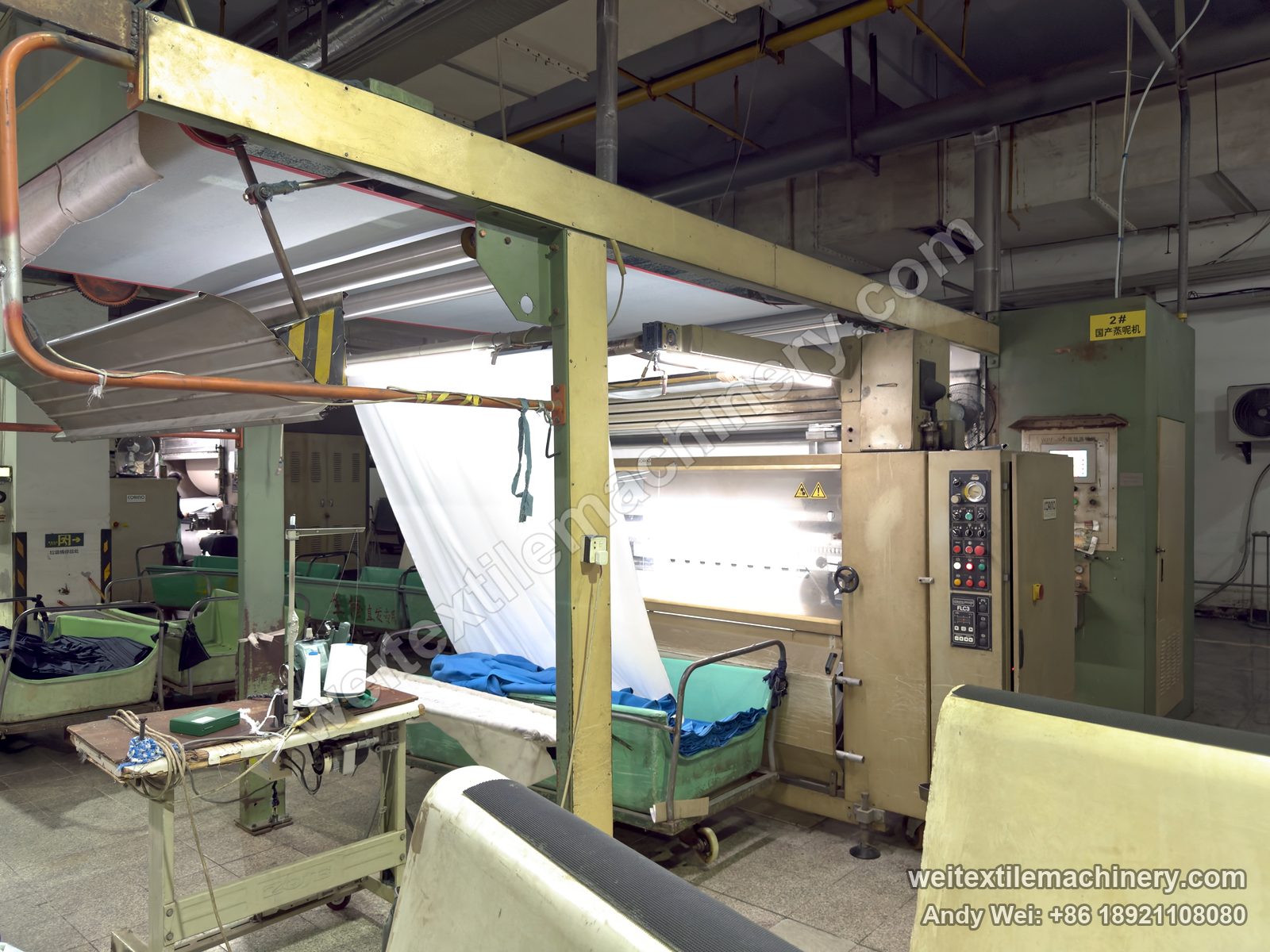
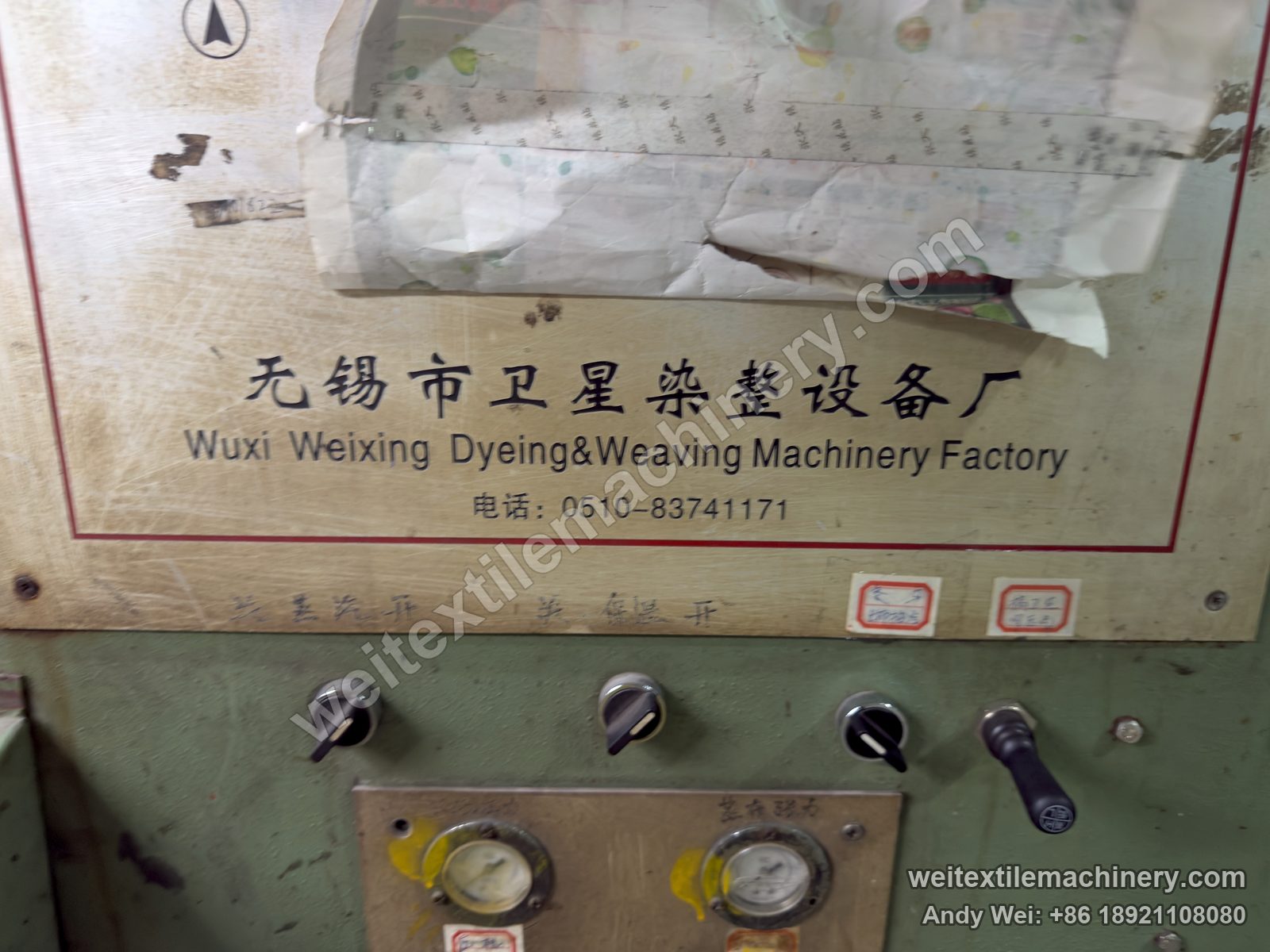
Today, that WPF-900 dual-inverter high-efficiency decatizing machine is still running at Heilan. The control cabinet carries the name ‘Wuxi Weixing Dyeing & Weaving Machinery Factory’, a predecessor name of QL Machinery, formerly Xingweixing Machinery.
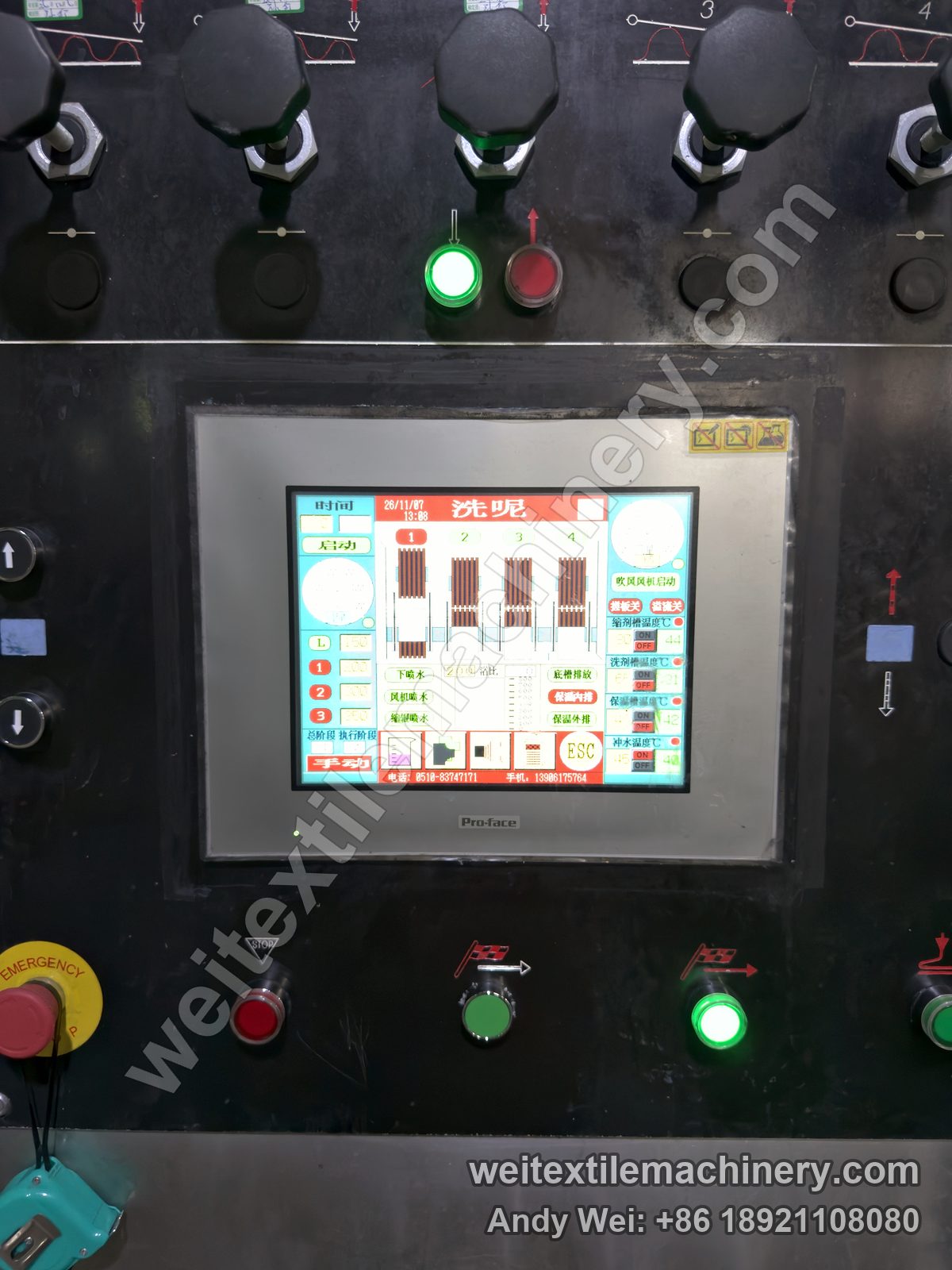
Over the years, we have also upgraded the touch screen and electrical control system of this WPF-900 dual-inverter high-efficiency decatizing machine, bringing newer operating controls to an early machine.
From Jiangyin No. 3 Worsted Mill to Heilan today: six crabbing machines, four backwashing lines and two decatizing machines. The equipment keeps developing; our support continues.
Heilan’s continuing commitment to worsted production, quality and process improvement also pushes us to refine our machines. Building new equipment and upgrading existing lines so that they develop with the mill is a shared direction in this long relationship.
Decatizing: from a first machine to a new generation
China’s first was a starting point. Continuing to improve each generation of decatizing equipment is the work that follows.
Our independently developed WPF-JXZN-MAX Discontinuous Decatizing Machine is now being installed at Heilan. It is the world’s first discontinuous decatizing machine with a 2 m diameter decatizing cylinder, bringing capacity, uniformity and steam efficiency together in one design.
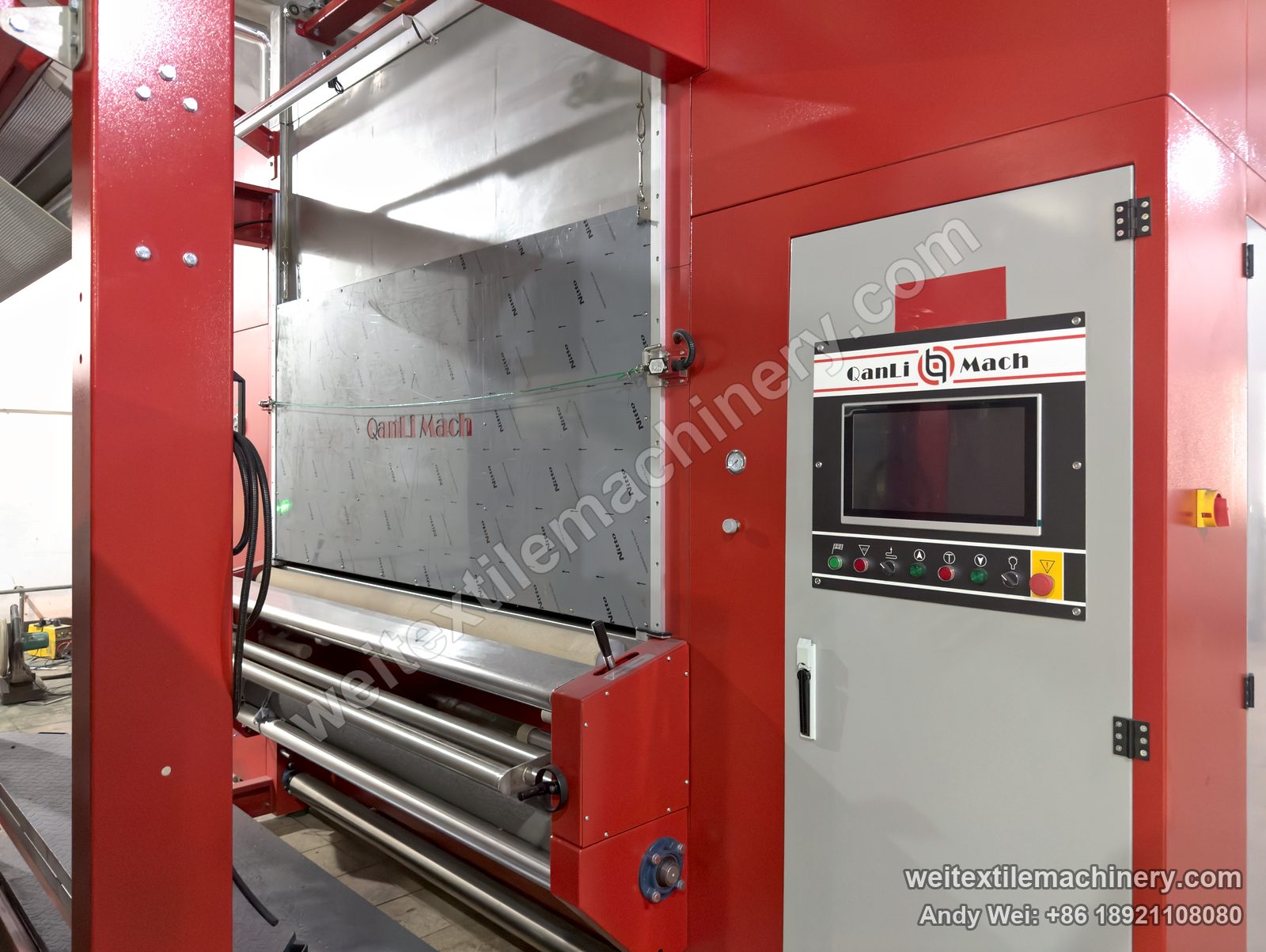
Ø2000 Oversized Decatizing Cylinder
More capacity, consistent results from head to tail
The Ø2000 cylinder has more than twice the conventional cylinder diameter for this class of discontinuous decatizing machine, eliminating head-to-tail piece variation at source. A single wrapper load holds 500–1,000 m, combining higher capacity with consistent decatizing.
QL Micro-Pressure Uniform Steaming Technology
Saving steam at source, for deeper decatizing
The cylinder’s internal geometry saves steam at source while preventing condensate formation and steam loss. Together, these two mechanisms reduce steam consumption by 50%+.
The micro-pressure design accelerates steam penetration, with no left-centre-right shading across the full fabric width and a deeper, fuller decatizing effect.
We have also upgraded the electrical system of the Corino weft straightener at the machine’s infeed. New machine manufacturing and the renewal of supporting equipment are progressing together at Heilan.
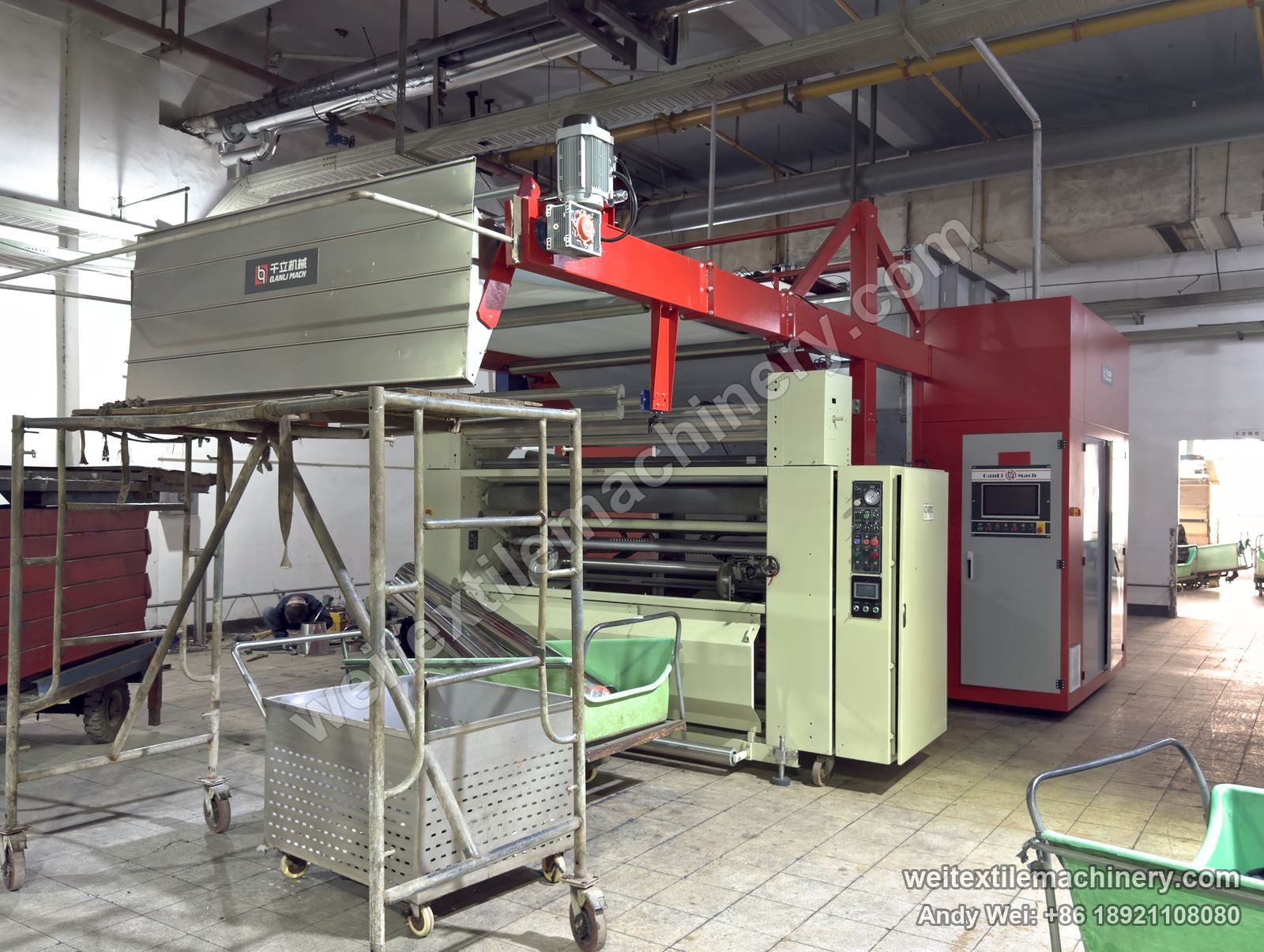
Four backwashing lines, three generations of improvement
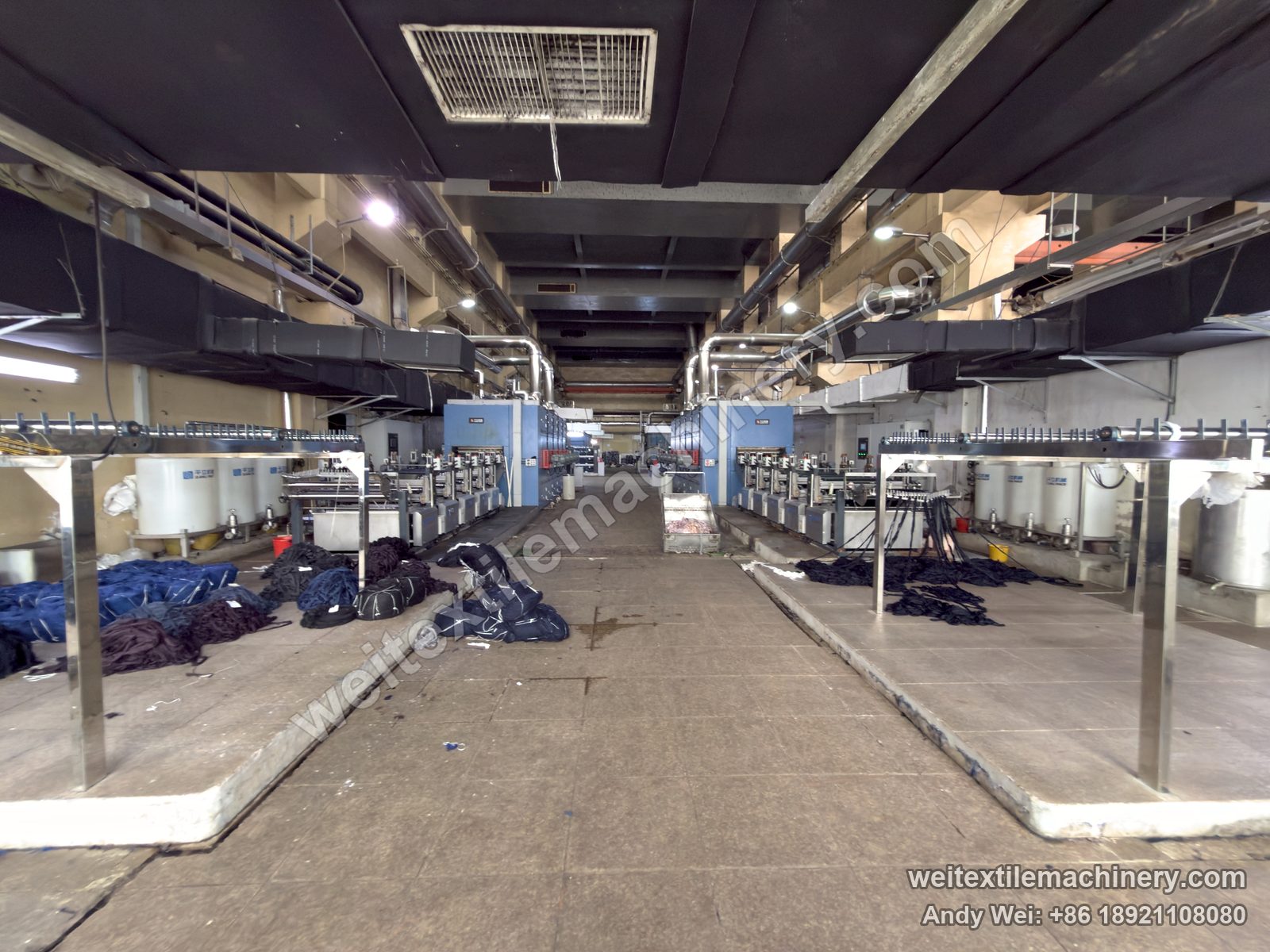
The four WPF-MTFX Wool Tops Backwashing Lines at Heilan record the development of three generations of our equipment.
First generation: continued upgrading of Line 4
Heilan bought this WPF-MTFX Wool Tops Backwashing Line in 2000. Its original 4-4-24 configuration comprised four washing bowls, four drying chambers and 24 ends of tops. It was our first-generation product.
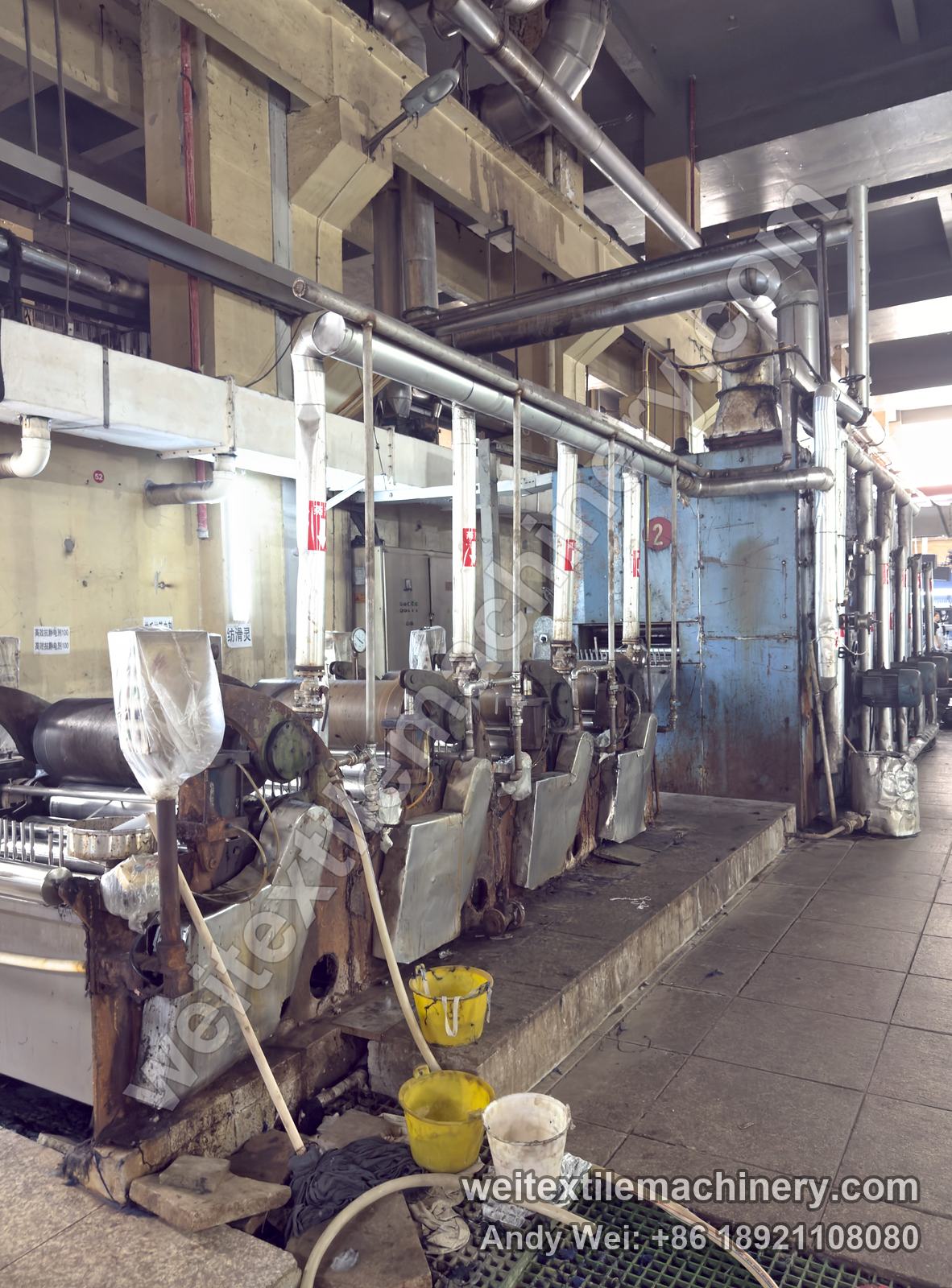
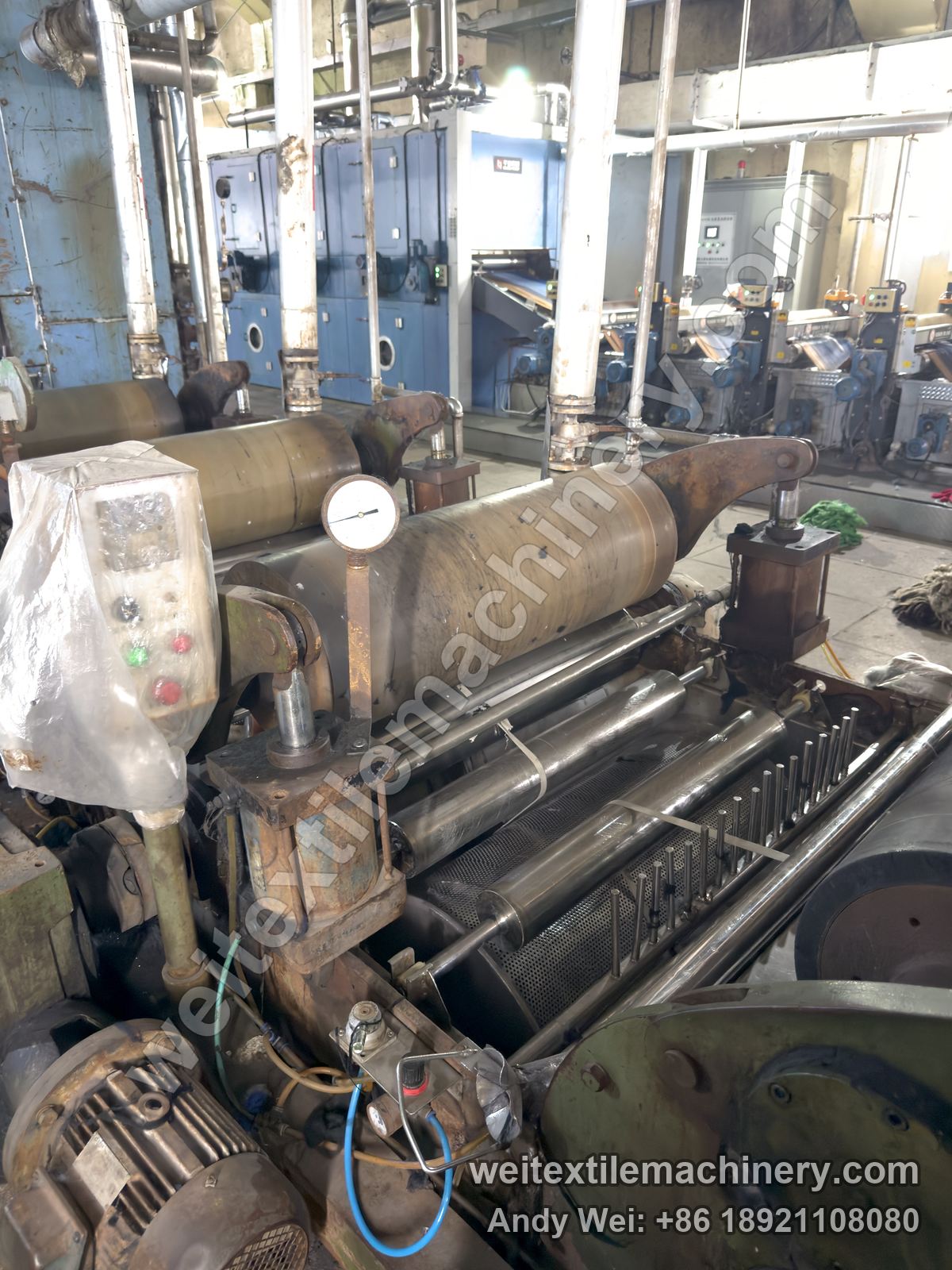
The first generation relied mainly on immersion washing, before negative-pressure suction was introduced, which limited how deeply the wash could reach into the tops. A single motor drove the whole line, also making adjustment and maintenance more demanding.
We later retrofitted the line to 4-4-36, expanding its washing and drying arrangement and increasing output. The complete electrical control system was upgraded as well, so that the line could continue to meet production needs.
Second generation: a system-wide upgrade on Line 3
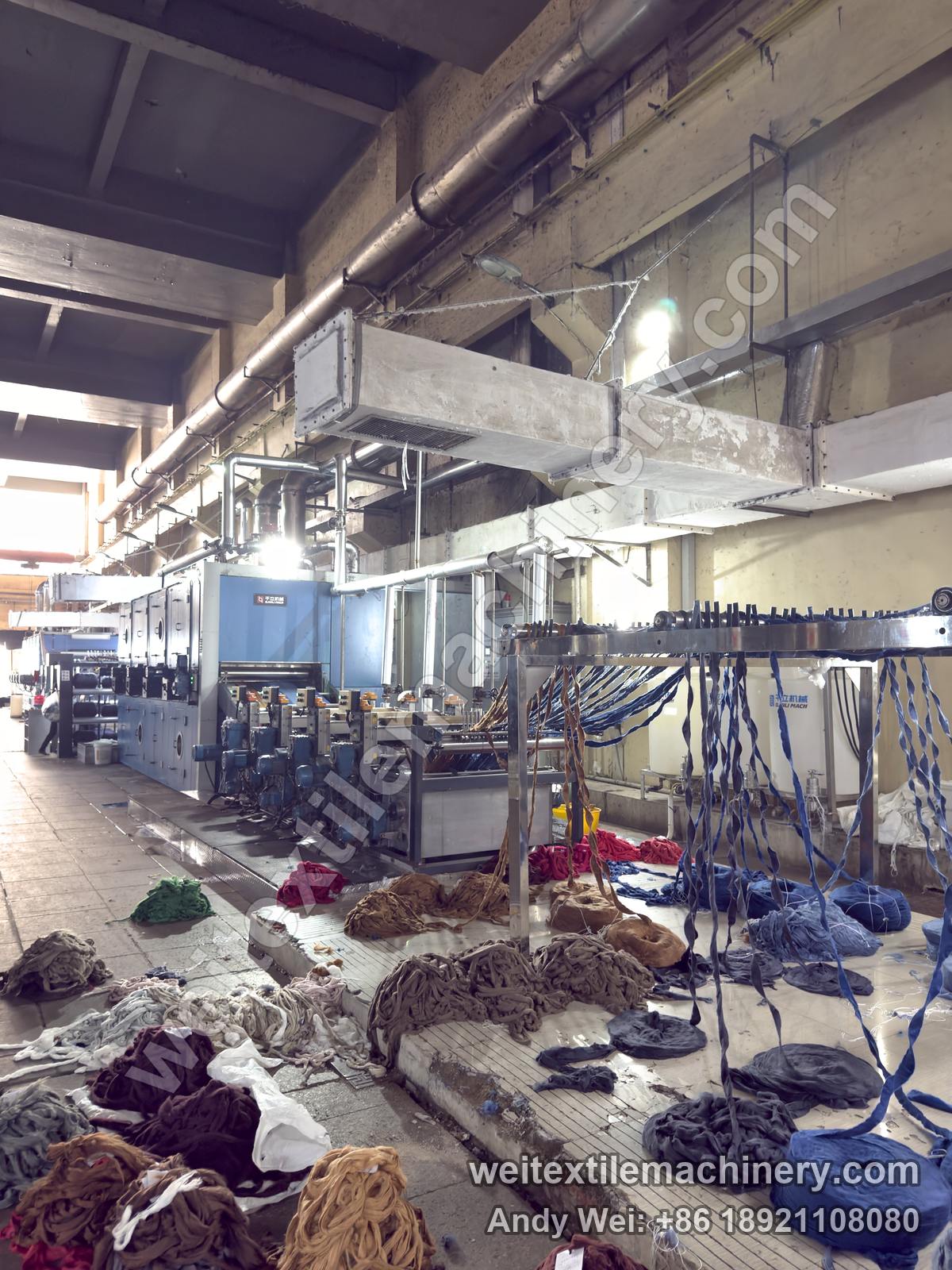
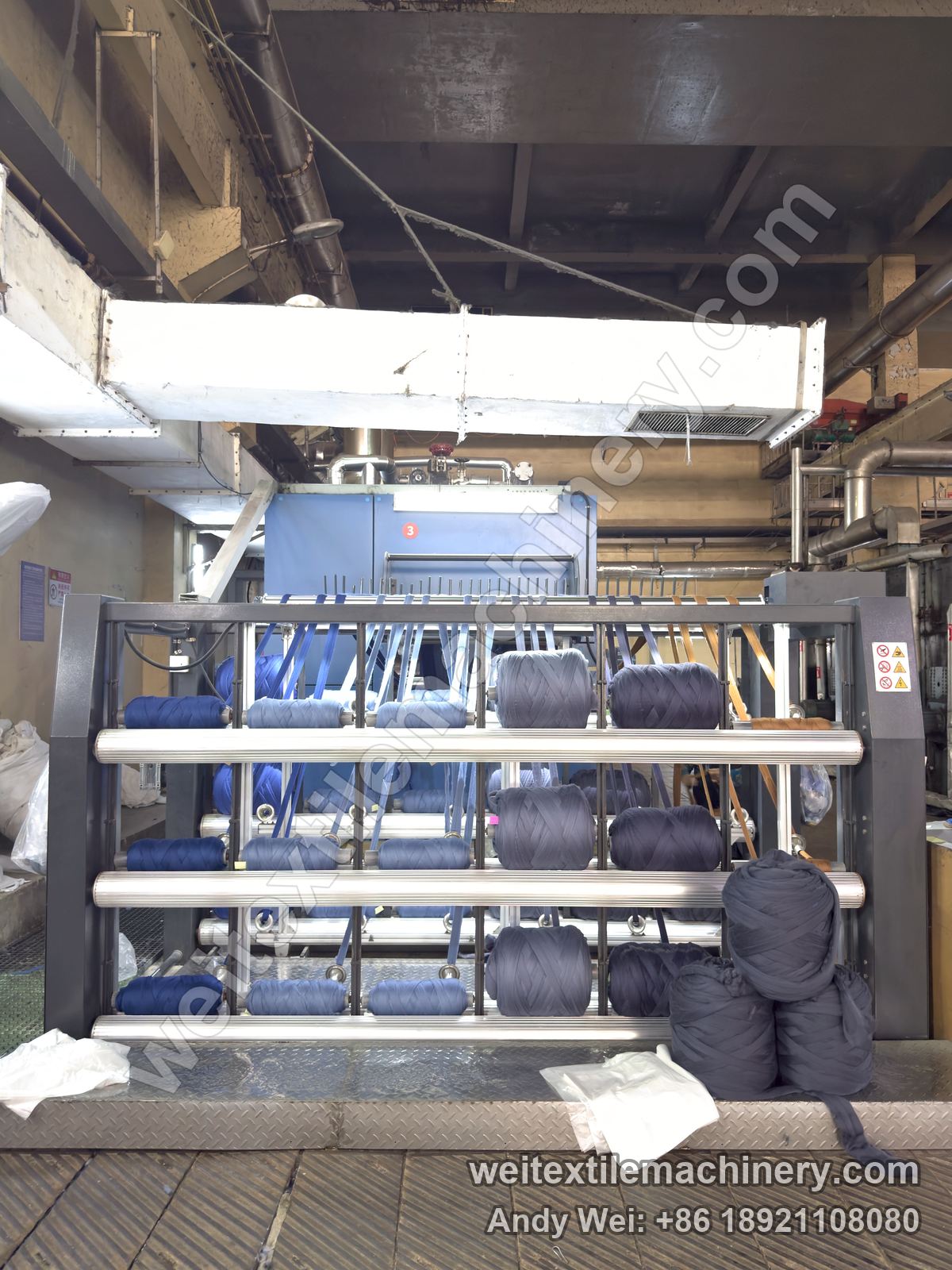
Line 3, in operation at Heilan, is the second-generation 4-4-36. Experience from the first generation became a system-wide upgrade to washing, drives, electrical controls and coordination between the process sections.
Third generation: further refinement on Lines 1 and 2
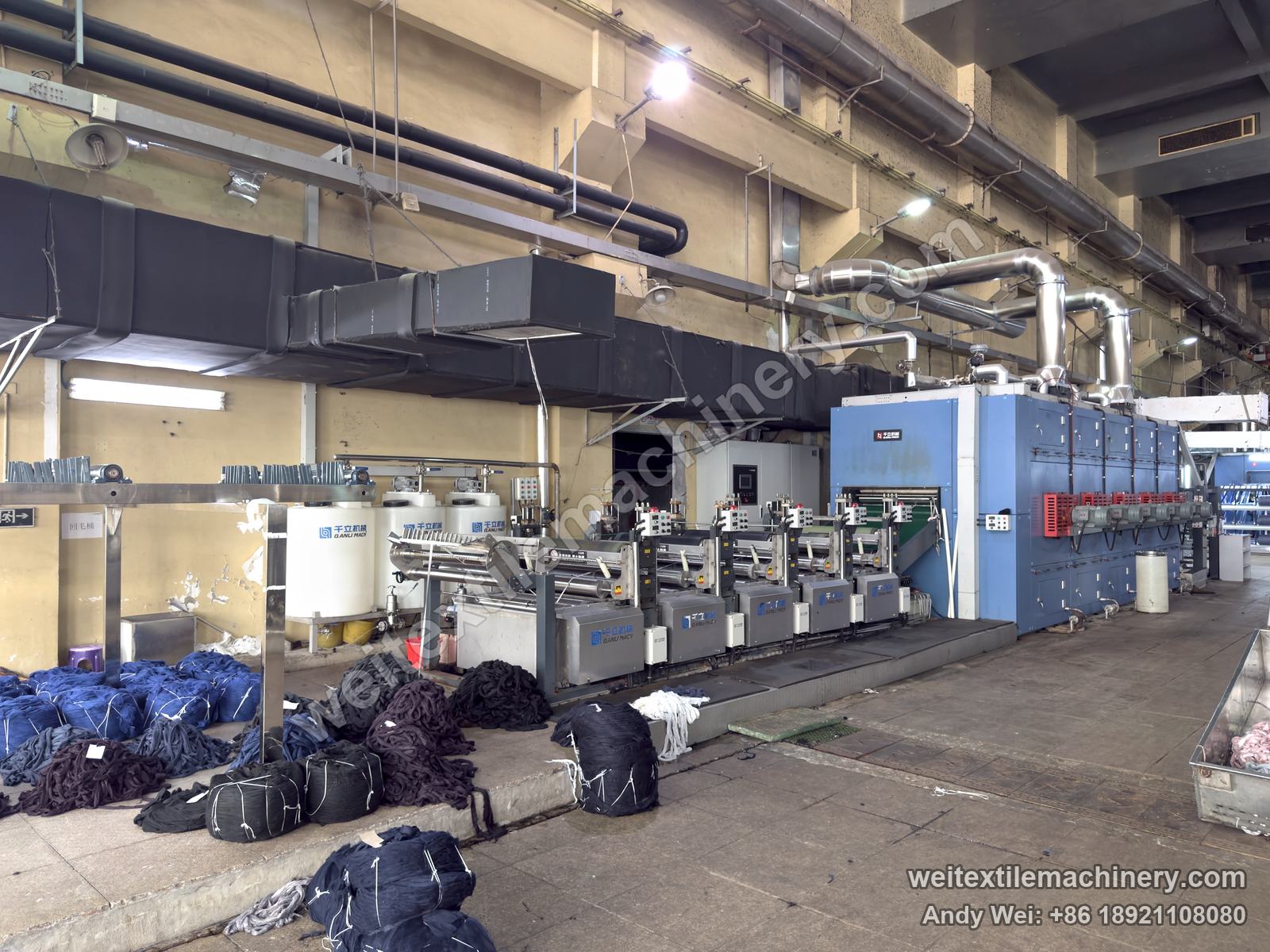
Lines 1 and 2 use the third-generation 5-5-36 configuration. Line 2 is being prepared for operation, with feeding, washing, squeezing, drying, delivery and ball winding arranged along the line. Line 1 is processing speciality fibres.
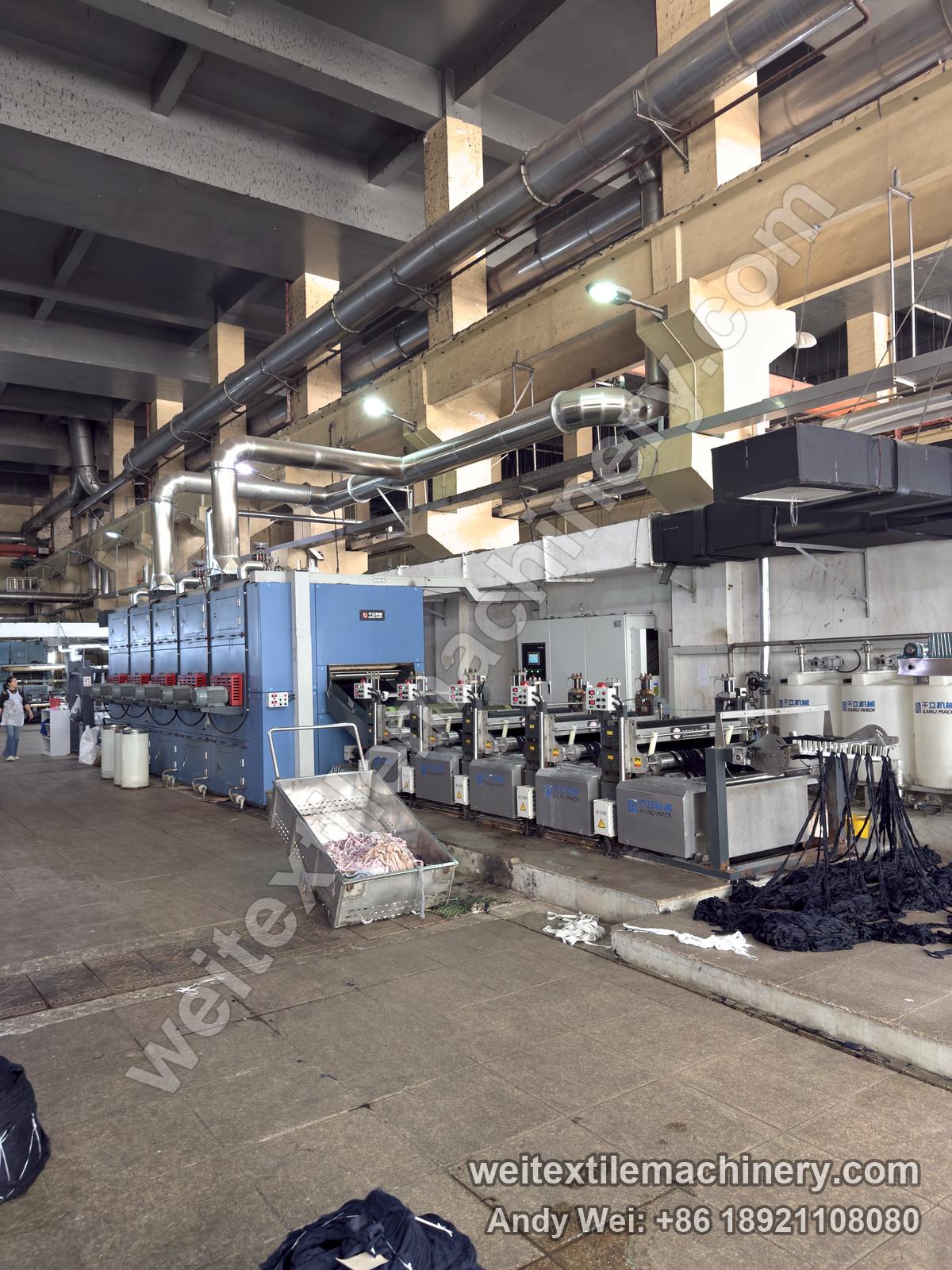
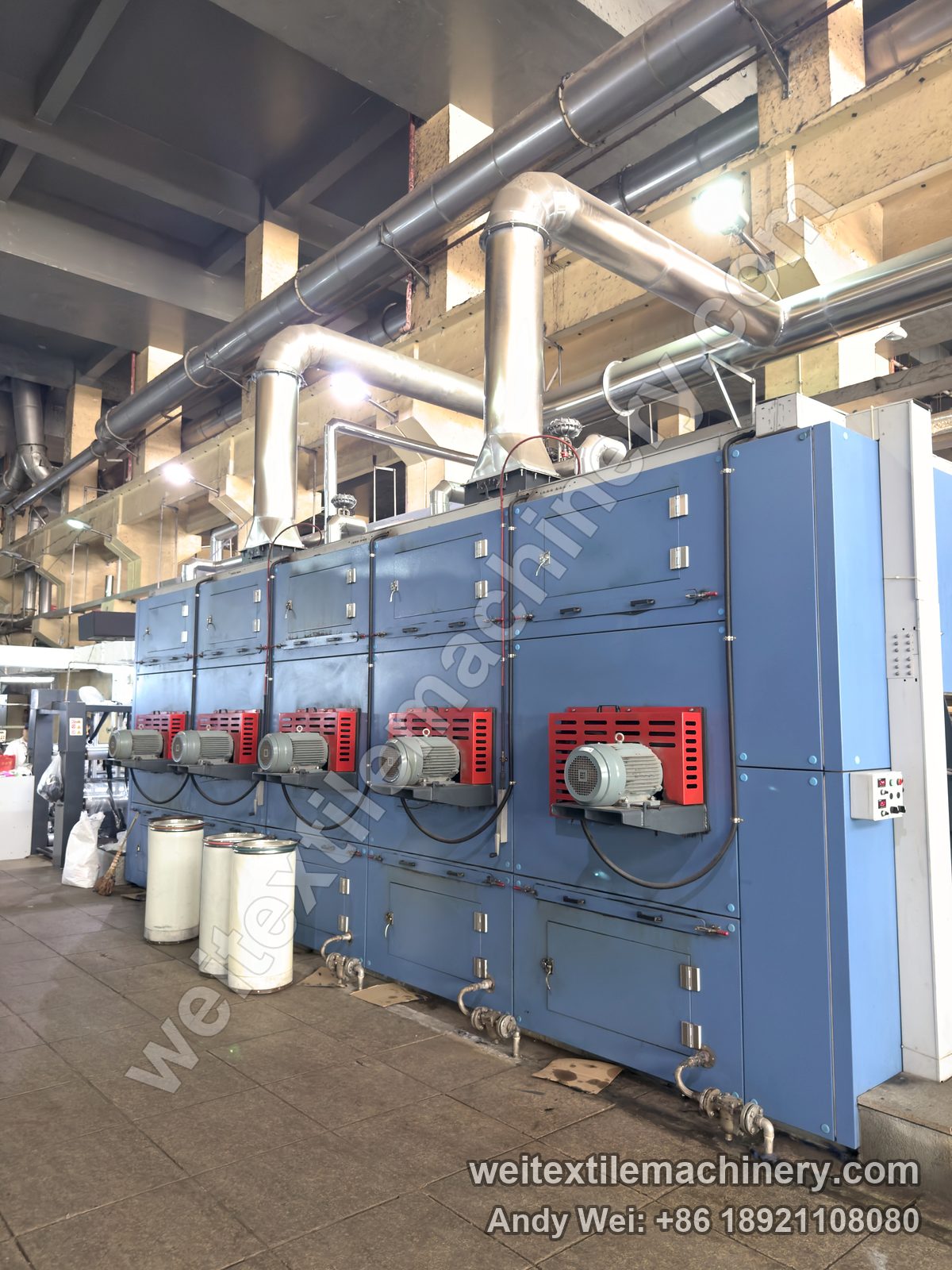
The third-generation 5-5-36 configuration combines five washing bowls, five drying chambers and 36 ends of tops, with further lengthening of the drying chambers. A shorter drying path often requires higher temperatures to complete drying, which can cause undyed wool tops to yellow. A longer path allows gentler drying while maintaining output and the colour of the tops. We have also refined running stability and process adjustment: more thorough washing, gentler drying and better-preserved bulk, for the treatment of different fibre materials.
QL Suction-and-Pressure Backwashing System
Suction washing reaches into the tops
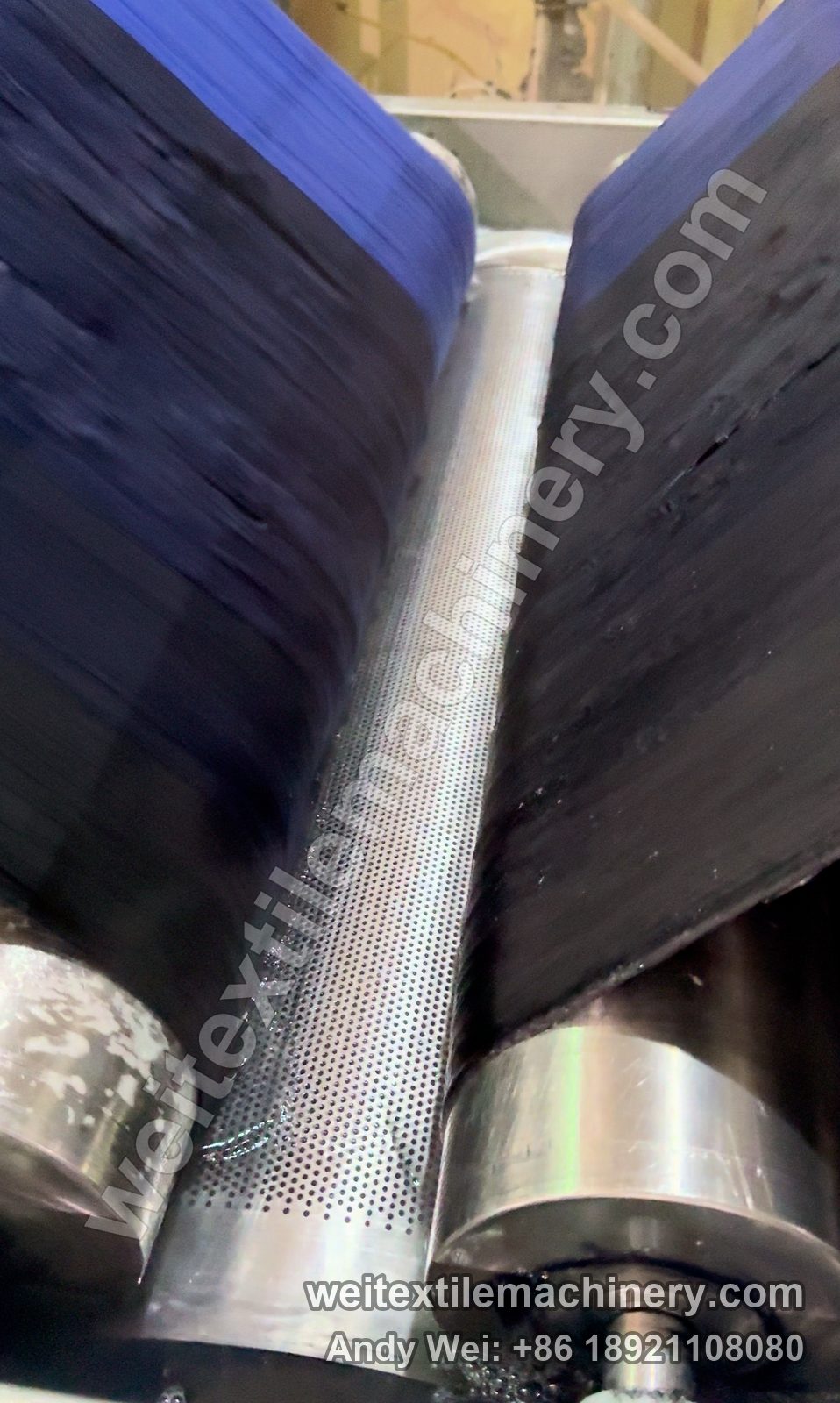
The suction pump inside the perforated cylinder draws washing liquor from the outside of the bowl through the layer of tops, carrying away loose dye and unfixed dyeing auxiliaries. Washing reaches through the tops, going further than immersion alone.
9-Tonne Heavy-Duty Squeezer
Thorough dewatering reduces the drying load
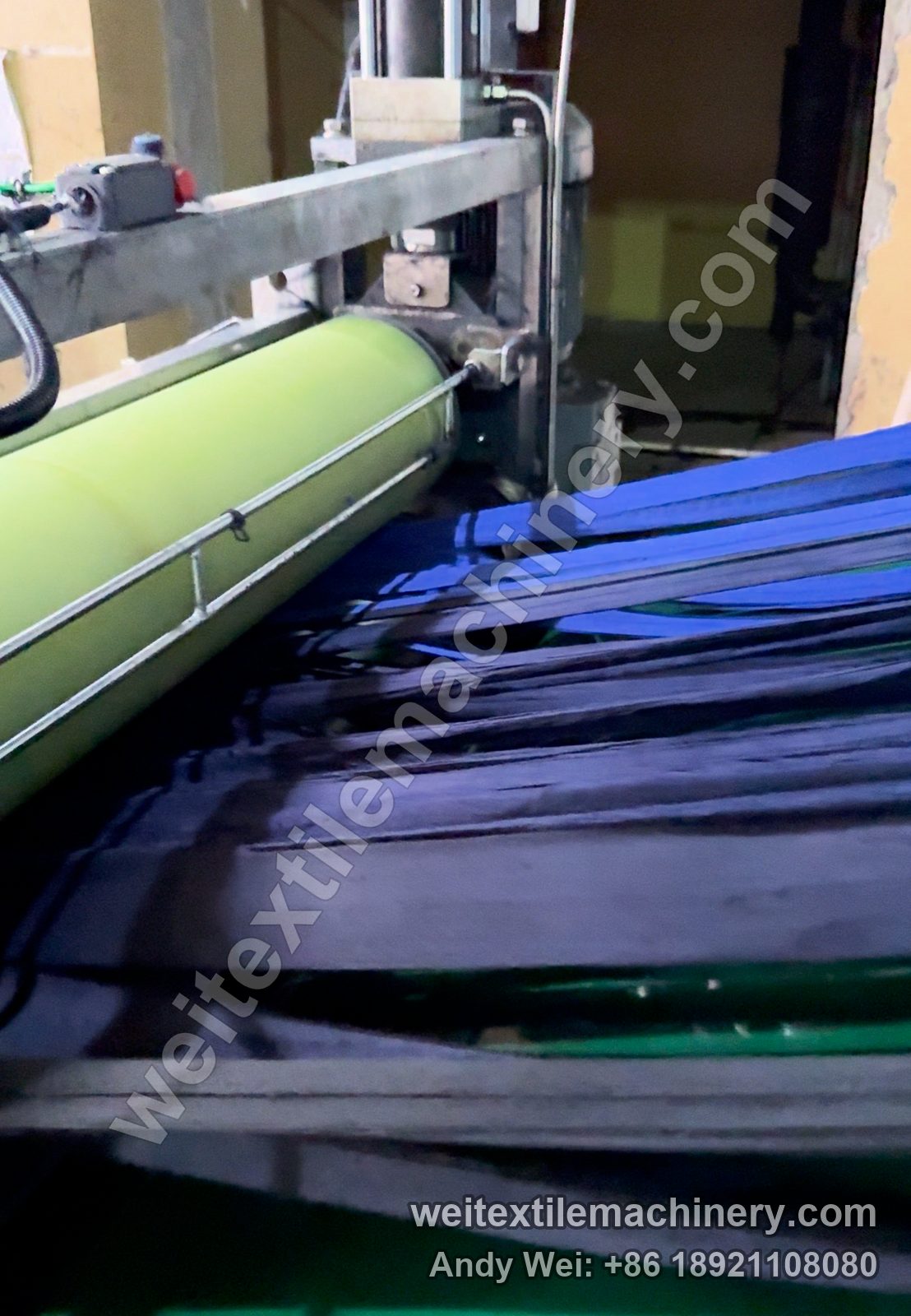
After washing, the 9-tonne heavy-duty squeezer presses water out of the tops thoroughly, reducing both time and energy demand in the drying stage that follows.
QL Vacuum-Retention Through-Flow Drying System
Gentler drying preserves the bulk of the tops
A micro-vacuum inside each perforated drum holds the tops loosely against its surface. Heated air passes through the fibre layer to remove moisture, then is drawn back through the drum and recirculated. The tops are not compacted, so their bulk is preserved.
Independent drives and coordinated speed adjustment make process changes easier. Modular washing bowls, cylinders and filters make cleaning and maintenance more convenient. Each generation’s improvements answer practical details of production and operation.
From a first build to industry firsts
The world’s first crabbing machine with single-bath, twin-cylinder reciprocation puts our willingness to build a first into specific decisions about process, capacity and fabric protection.
Our work on crabbing has continued from the twin-bath machine built by hand at the beginning of this story to the machines we build today.
The WPF-ZN single-bath twin-cylinder reciprocating Crabbing Machine brings this manufacturing experience to uniform heating, wrapper capacity, floor space and fabric protection.
Single-Bath Twin-Cylinder Reciprocation
One heat history for the entire piece
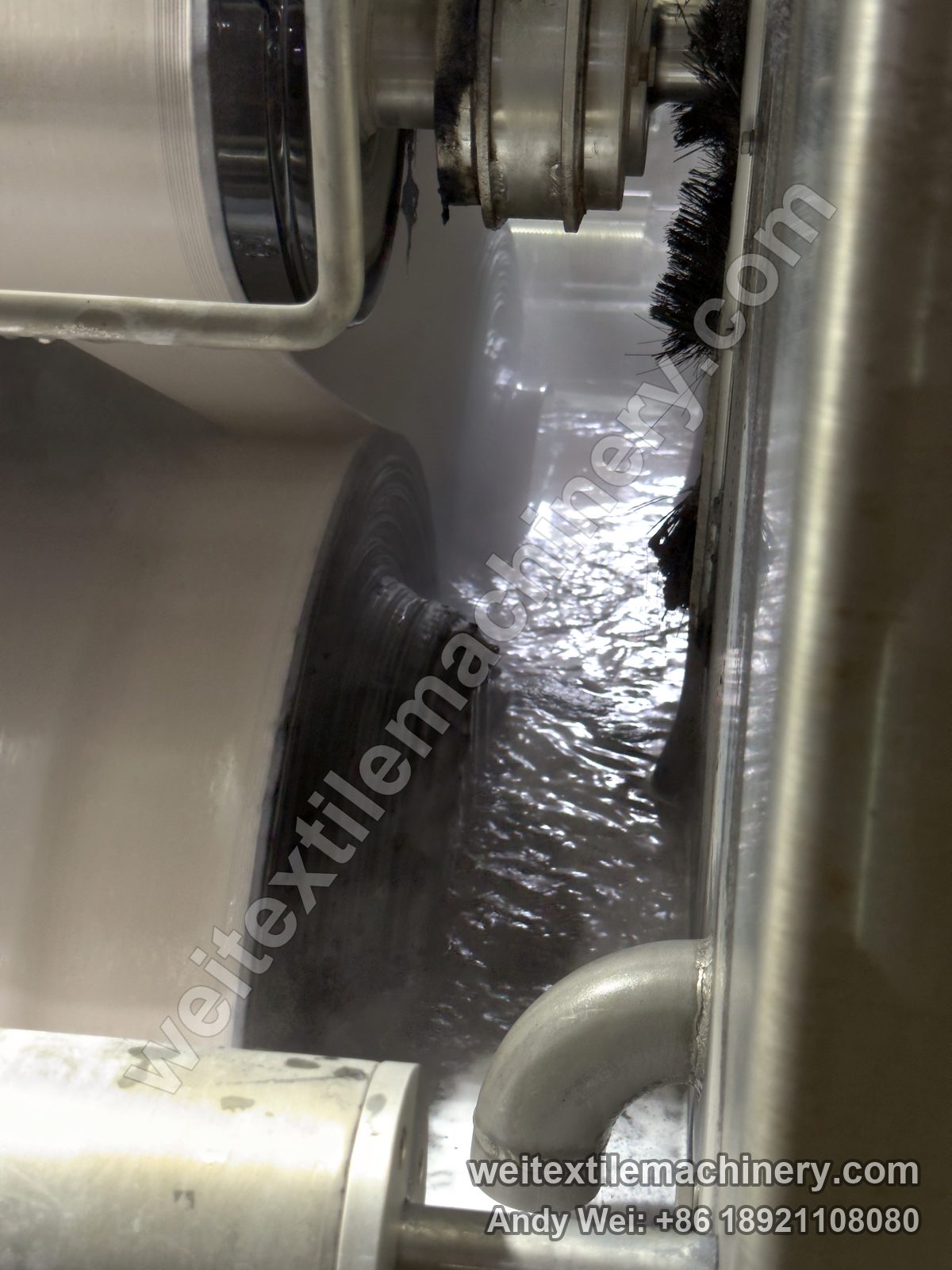
The fabric exchanges position as it winds back and forth within the same water bath. The entire piece follows the same heat history, with no head-to-tail variation.
Linked Roll Diameters · One Shared Chamber
More cloth on the same floor space
Total wrapper length stays constant. As the roll diameter on the left grows, the one on the right decreases; both rolls share one chamber allowance. This gives a smaller footprint at the same capacity, or more capacity on the same floor space.
In the comparison between the two generations at Heilan, the original twin-bath crabbing machine held two pieces of cloth. On the same floor space, the WPF-ZN single-bath twin-cylinder reciprocating Crabbing Machine holds 6–8 pieces of worsted fabric.
Wrapper-Borne Tension · Zero Fabric Elongation
Knitted wool fabrics can be processed too
The wrapper carries the fabric, with wrapper tension held constant by torque control. Tension does not act directly on the fabric: low tension, zero elongation, with knitted wool fabrics also accommodated.
Twin-Cylinder Wrapper Centring
Wrapper winding stays centred throughout
Photoelectric guiding controls wrapper winding on both cylinders throughout the cycle, keeping the rolls centred and eliminating flare-shaped winding. Fabric heating and wrapper winding are considered together, for process results and stable operation.
Continuous crabbing and drying: building and renewing
Building new machines and upgrading existing equipment are both part of our continuing work with Heilan.
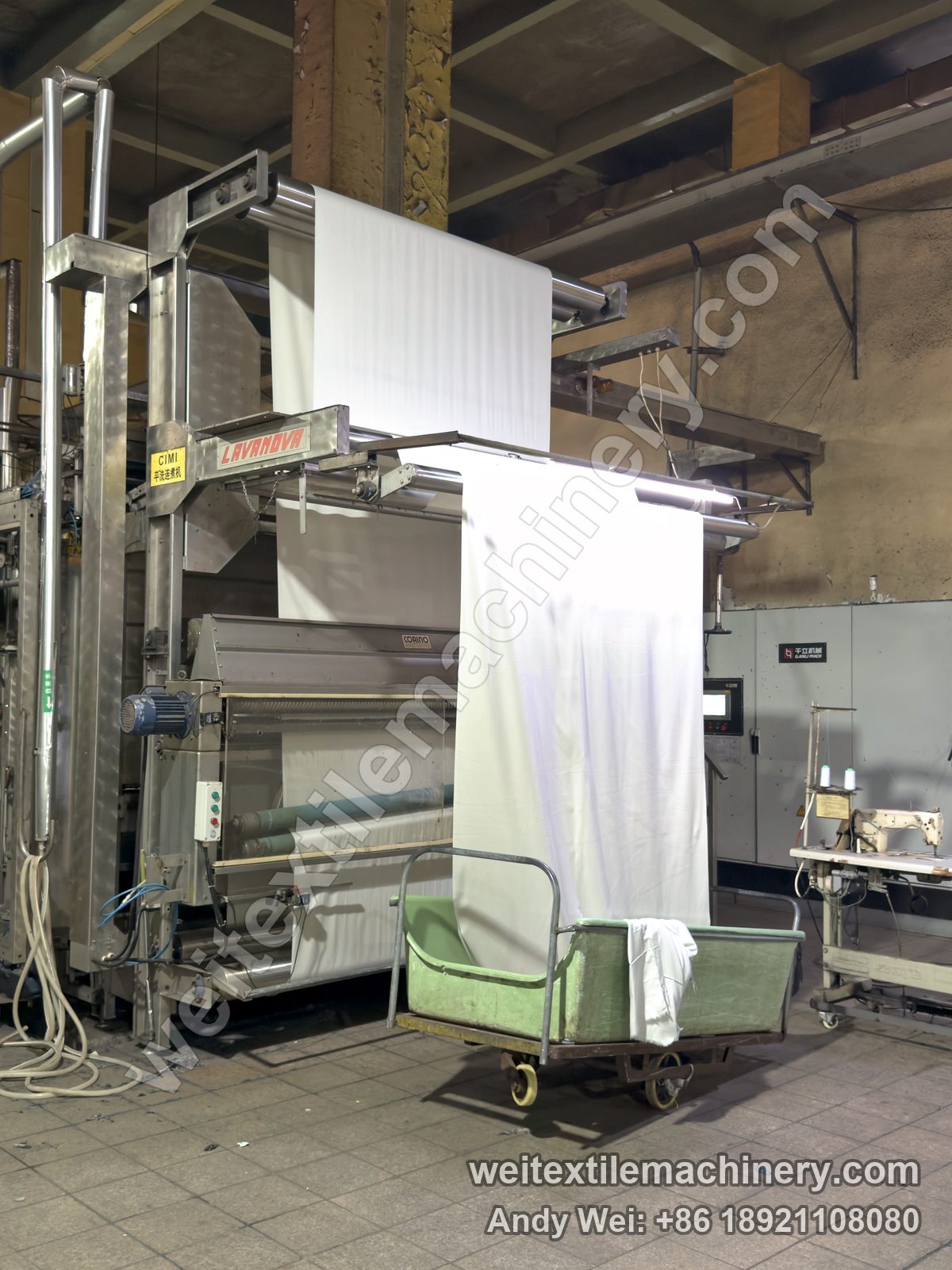
On the workshop floor, the WPF-LXZH Continuous Crabbing and Drying Line stands on the right, with the CIMI Superfix Continuous Crabbing and Drying Line on the left. We manufactured the WPF-LXZH; we are now renewing the electrical system of the CIMI Superfix.
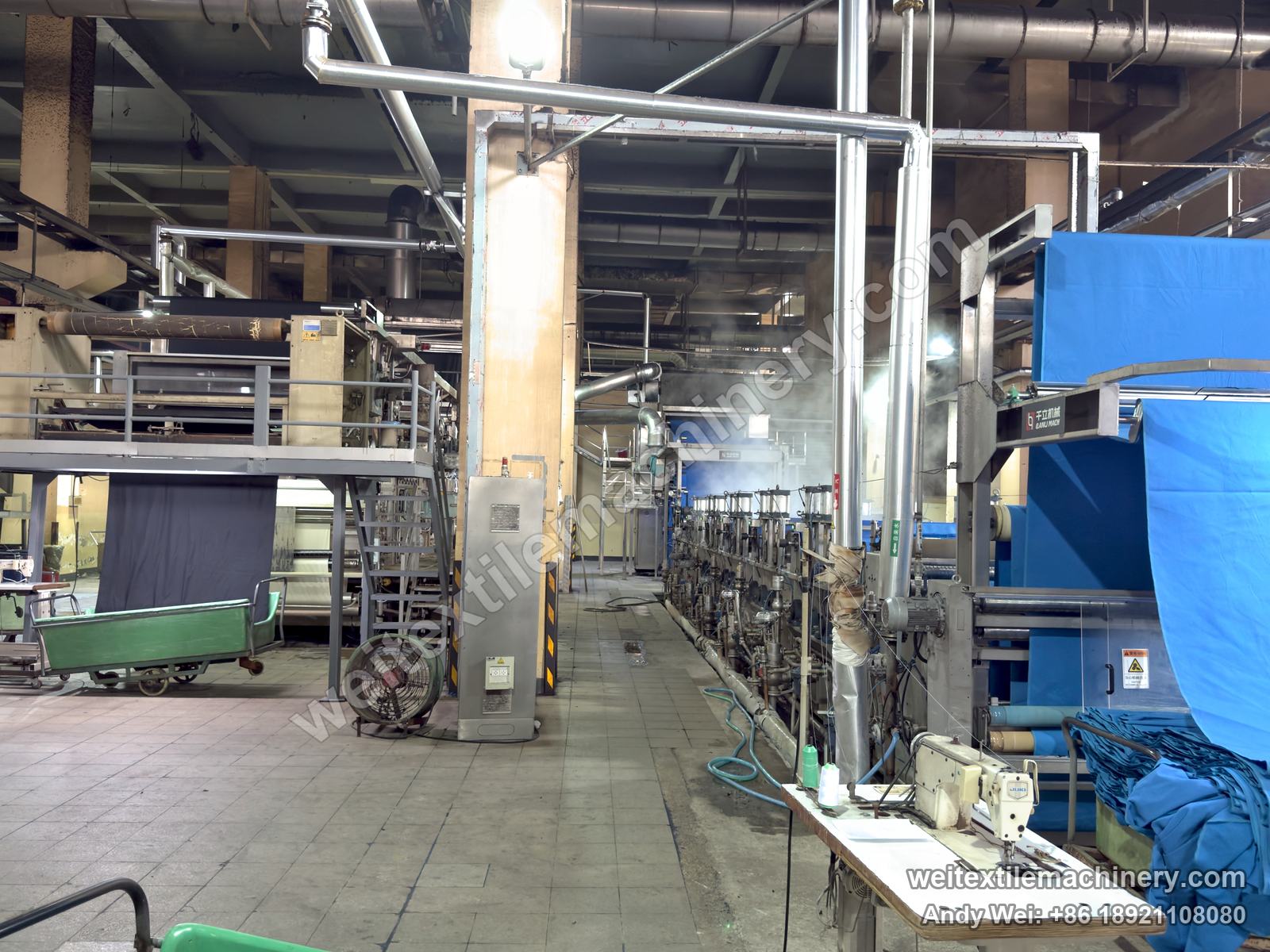
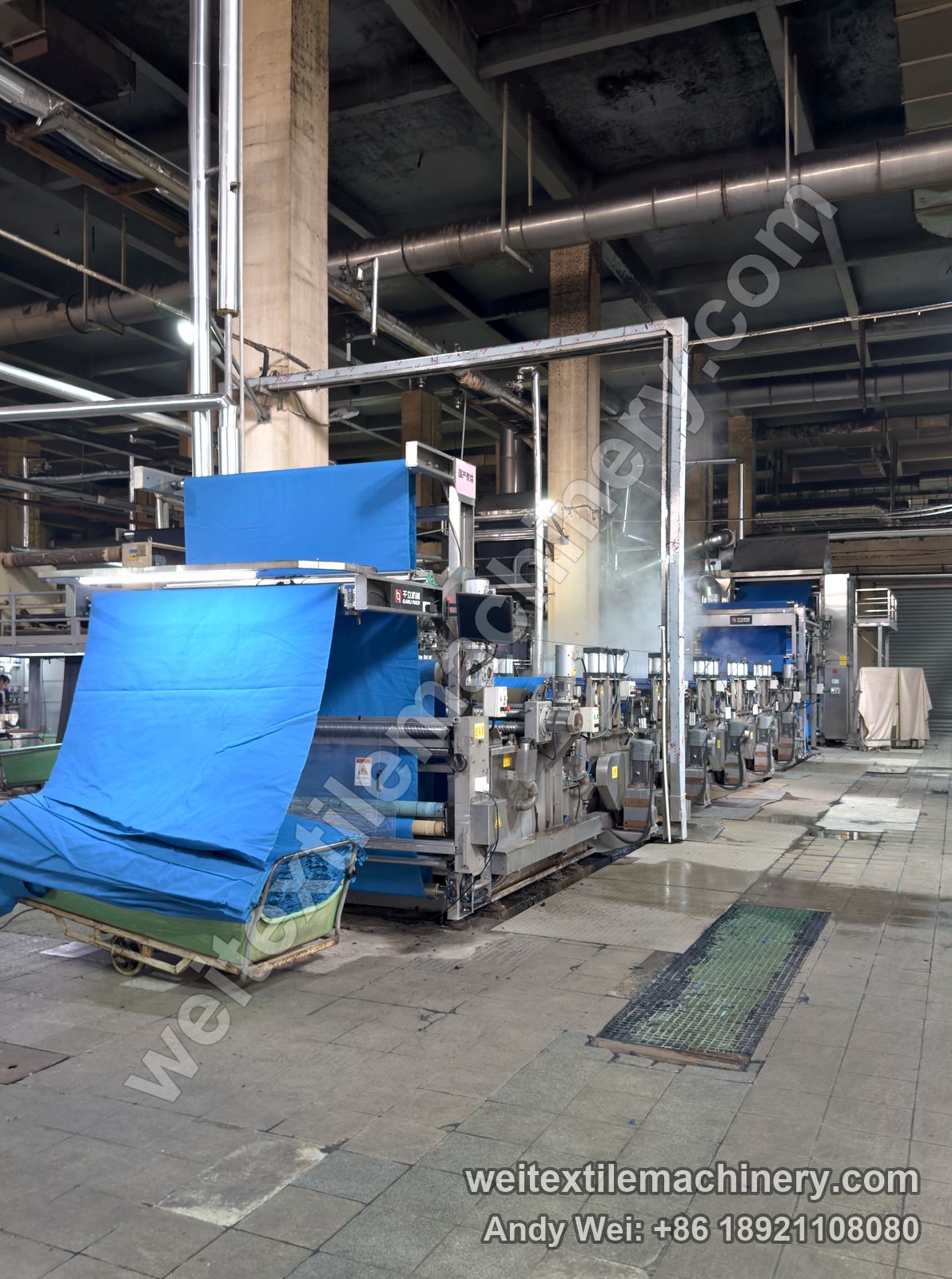
The WPF-LXZH Continuous Crabbing and Drying Line uses the QL Multi-Bath Immersion-Press Setting System and the QL Tiered Temperature-Control Drying System to connect crabbing, cooling, heavy squeezing and drying. The continuous crabbing and cylinder drying sections are each complete in themselves: they can run together as a line or be selected separately.
Delivery-End Cold-Air Suction · Perforated-Drum Suction Air Cooling
Thorough cooling, flat delivery without crease marks
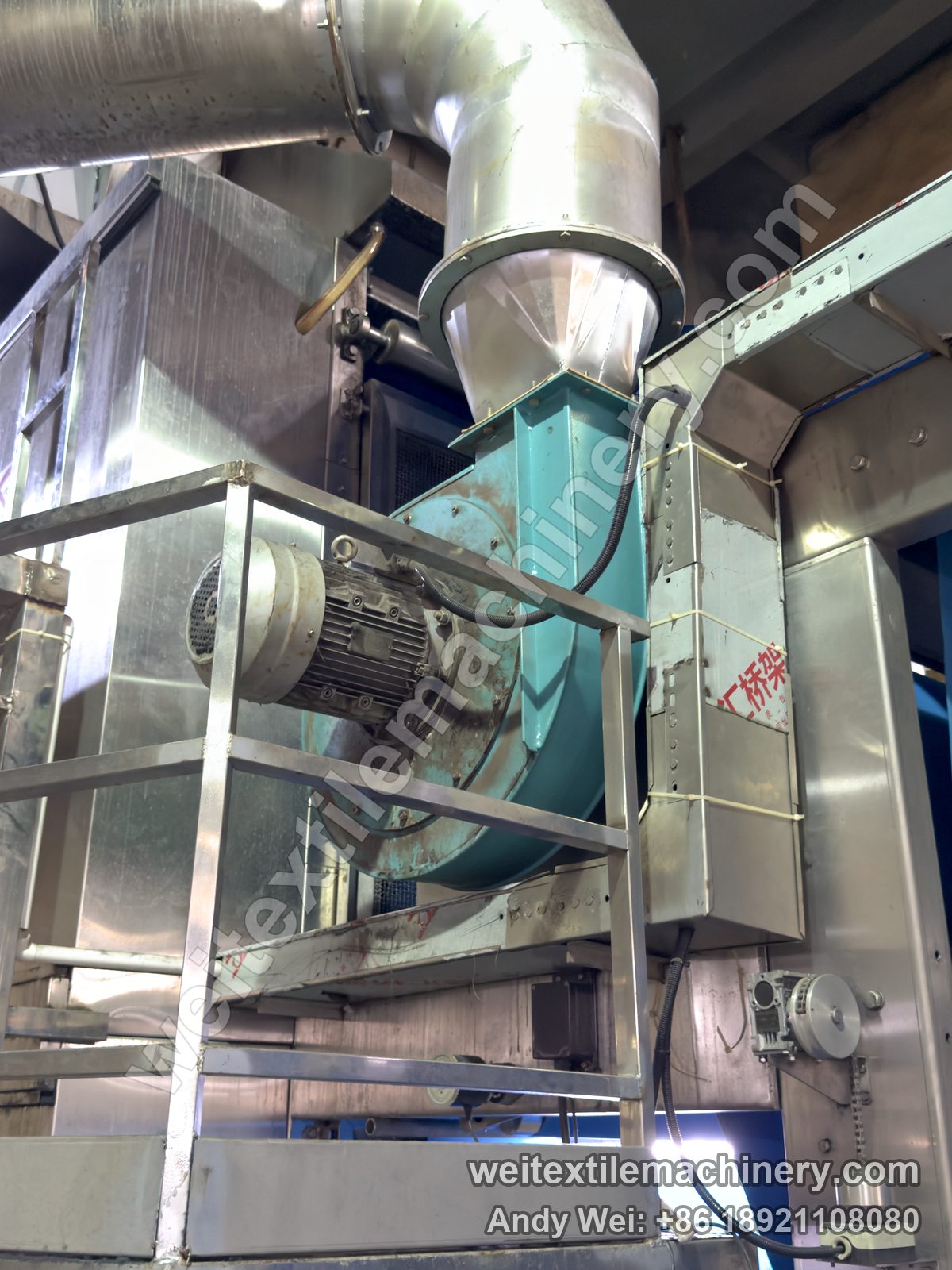
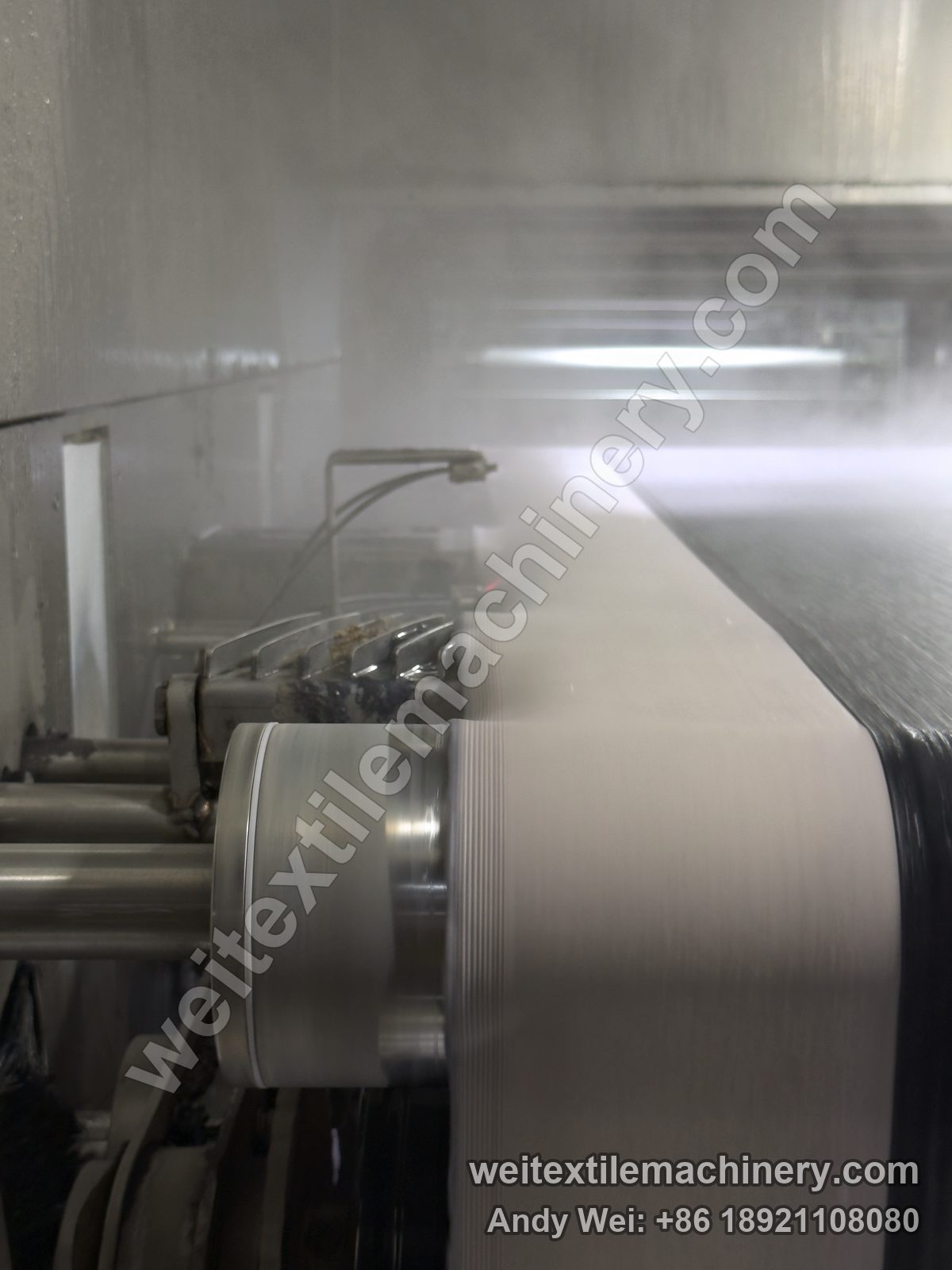
At the end of drying, the cold-air suction fan works with the perforated-drum suction air-cooling system to cool the fabric thoroughly before delivery.
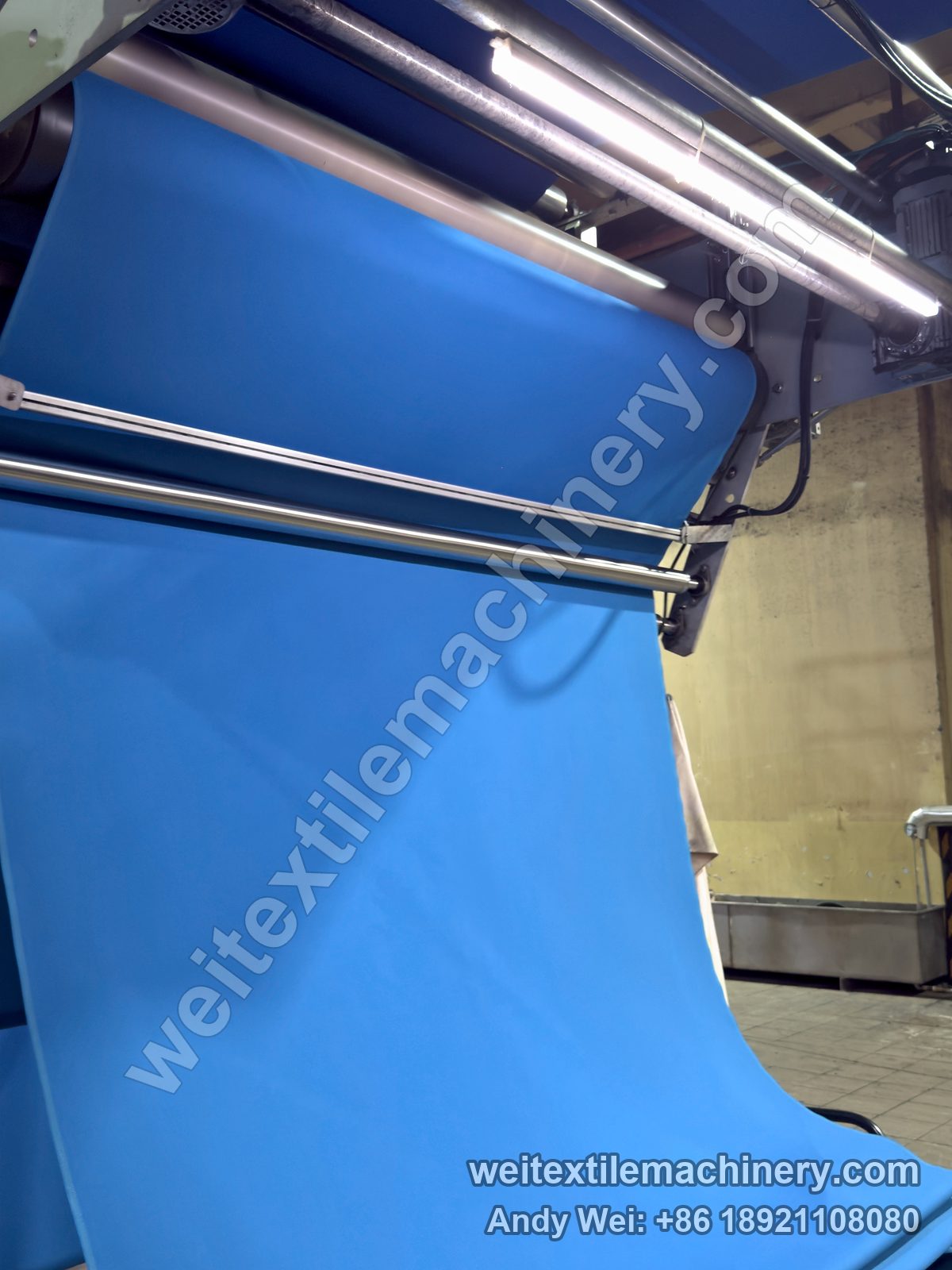
Cooling and delivery follow smoothly: the fabric comes off flat and free of crease marks.
Retrofits and renewal for imported equipment
From continuous crabbing and drying to washing, crabbing, scouring and milling, our service extends across more process stages. We also retrofit and service the CIMI LAVANOVA open-width washing and crabbing equipment. For imported machines that have been in use for twenty or thirty years, we combine electrical renewal with mechanical maintenance, giving familiar equipment a new working life.
CIMI Flexifola 4C Four-Channel Scouring and Milling Machine: from mechanics to operating controls
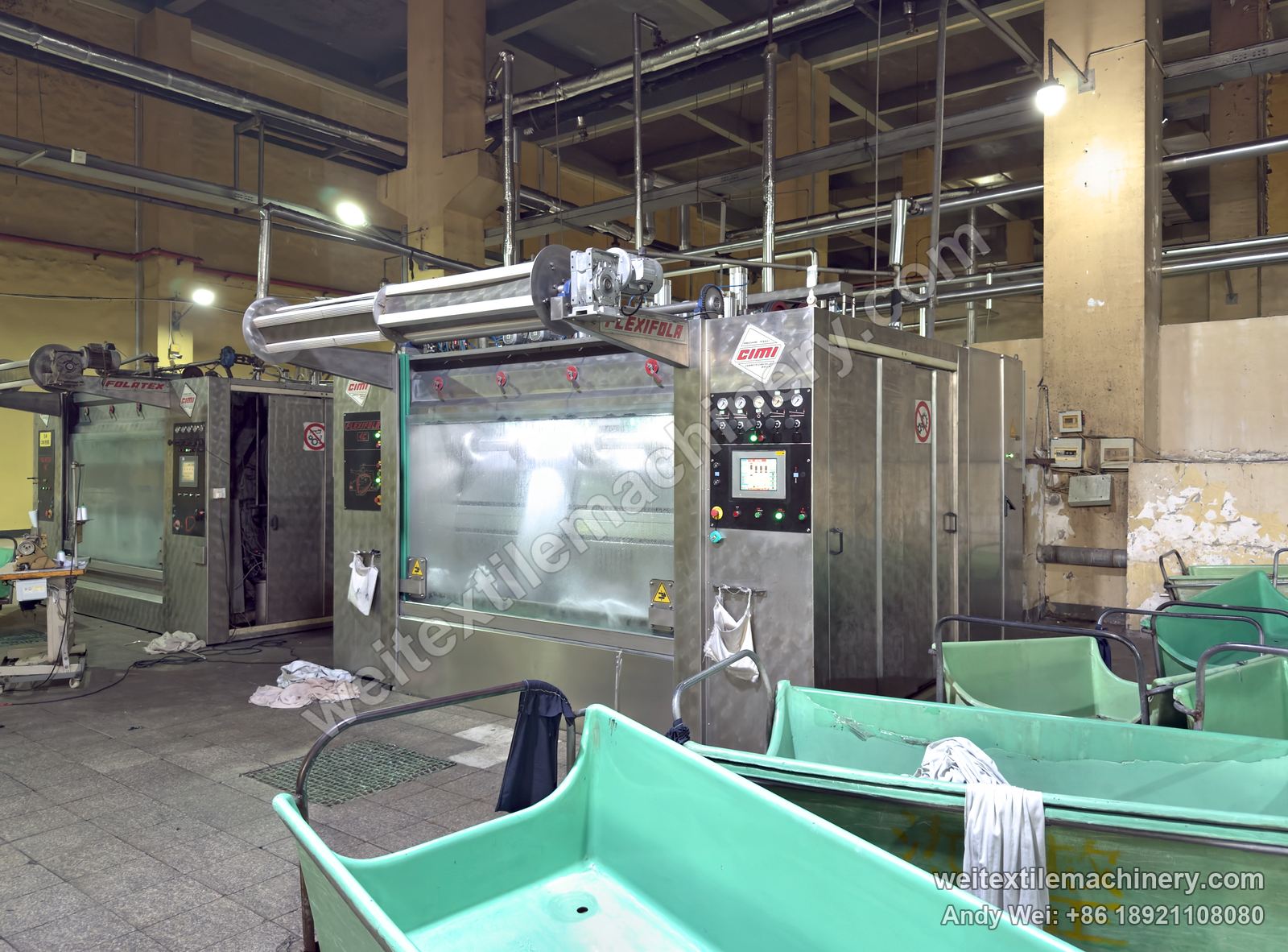
The CIMI Flexifola 4C Four-Channel Scouring and Milling Machine retains its mechanical body and original manufacturer’s markings, alongside the touch screen and electrical controls we have renewed. The full machine, control cabinet and operating interface record this continuing work.
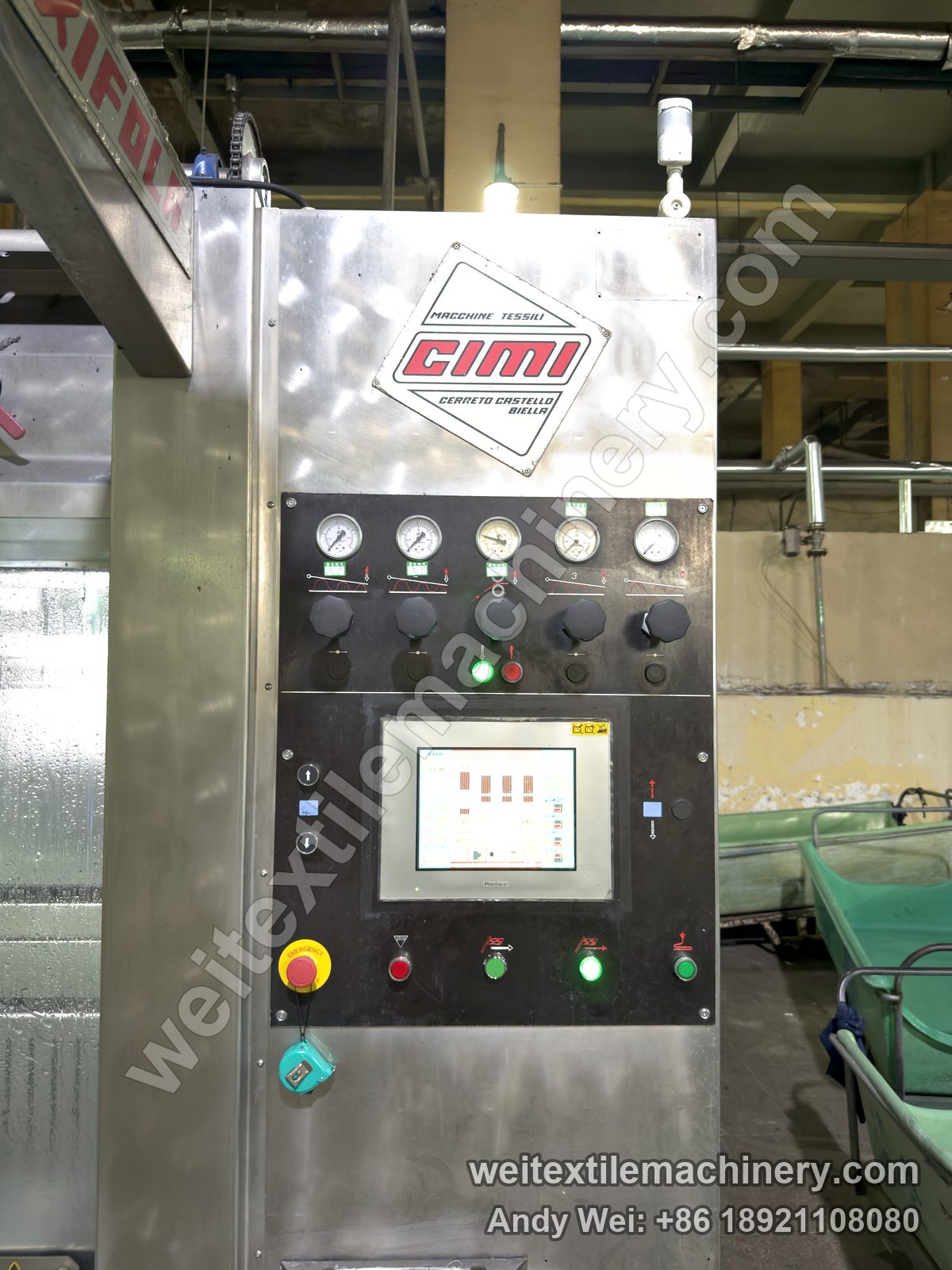
Electrical upgrades, rebuilding and service for existing machinery
Equipment develops. The relationship continues.
From Wei Shen’s first machine after graduation to today’s new installations and continuing retrofits, successive generations of equipment have carried the relationship between QL Machinery and Heilan for more than thirty years. As Heilan moves forward, we keep putting our willingness to build a first into manufacturing, upgrading and service.
Explore the machines and our service
From Xingweixing to QL: our history and work
Machine rebuilding and electrical upgrades · Discuss an upgrade to existing machinery
Imported machinery: CIMI · Corino
More customer sites: Miyuki Keori, Japan · UZWOOLENTEX
Planning an upgrade to backwashing, crabbing or decatizing? Tell us about your existing equipment, fabric and process requirements. We can work through a suitable upgrade with you.
A century house, for mills built to last.