
Rope Scouring Machine
WPF-XN
Rope Scouring Machine · Low-liquor-ratio scouring, engineered with the QL High-Efficiency Scouring System
The machine, up close
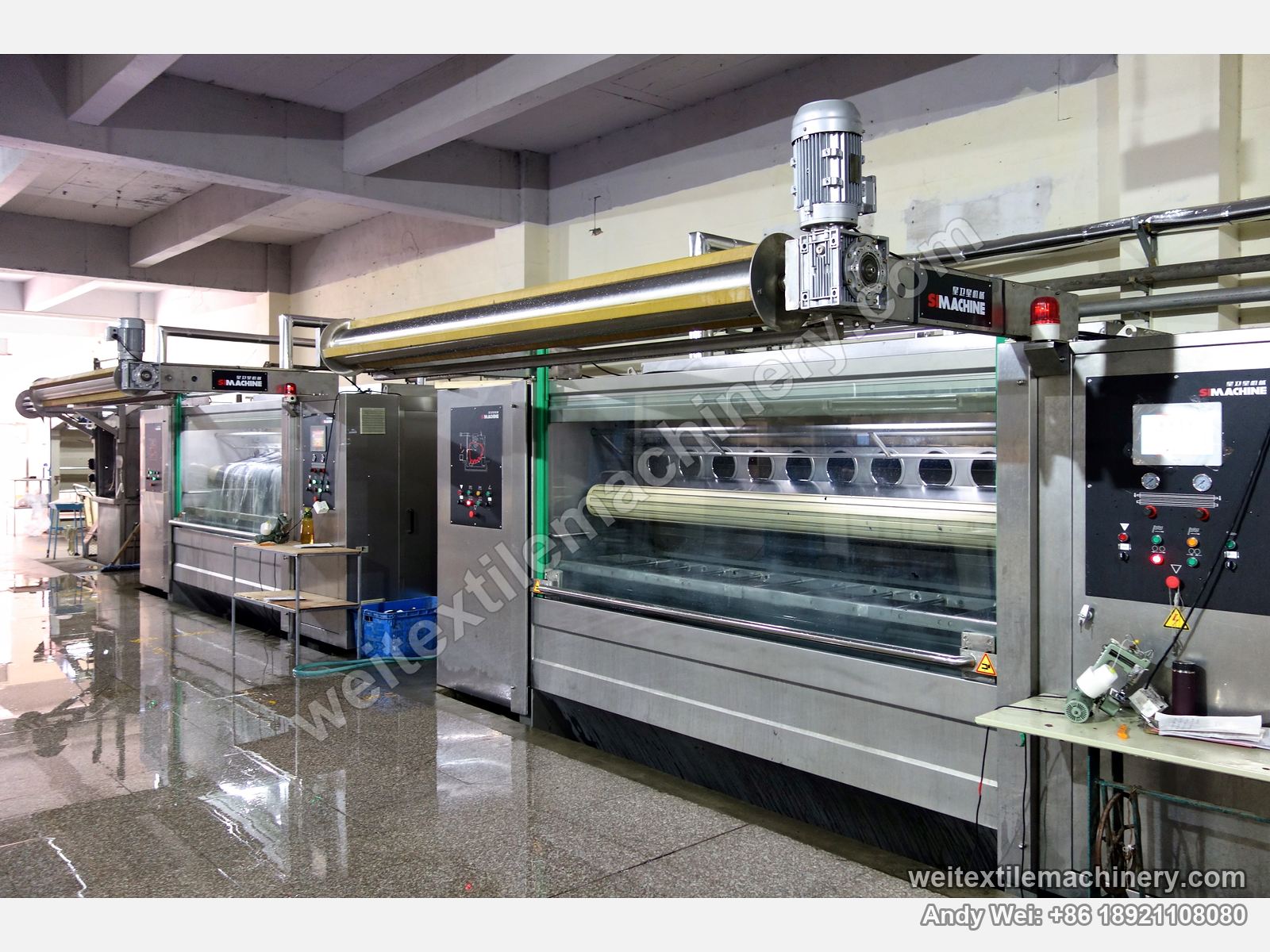
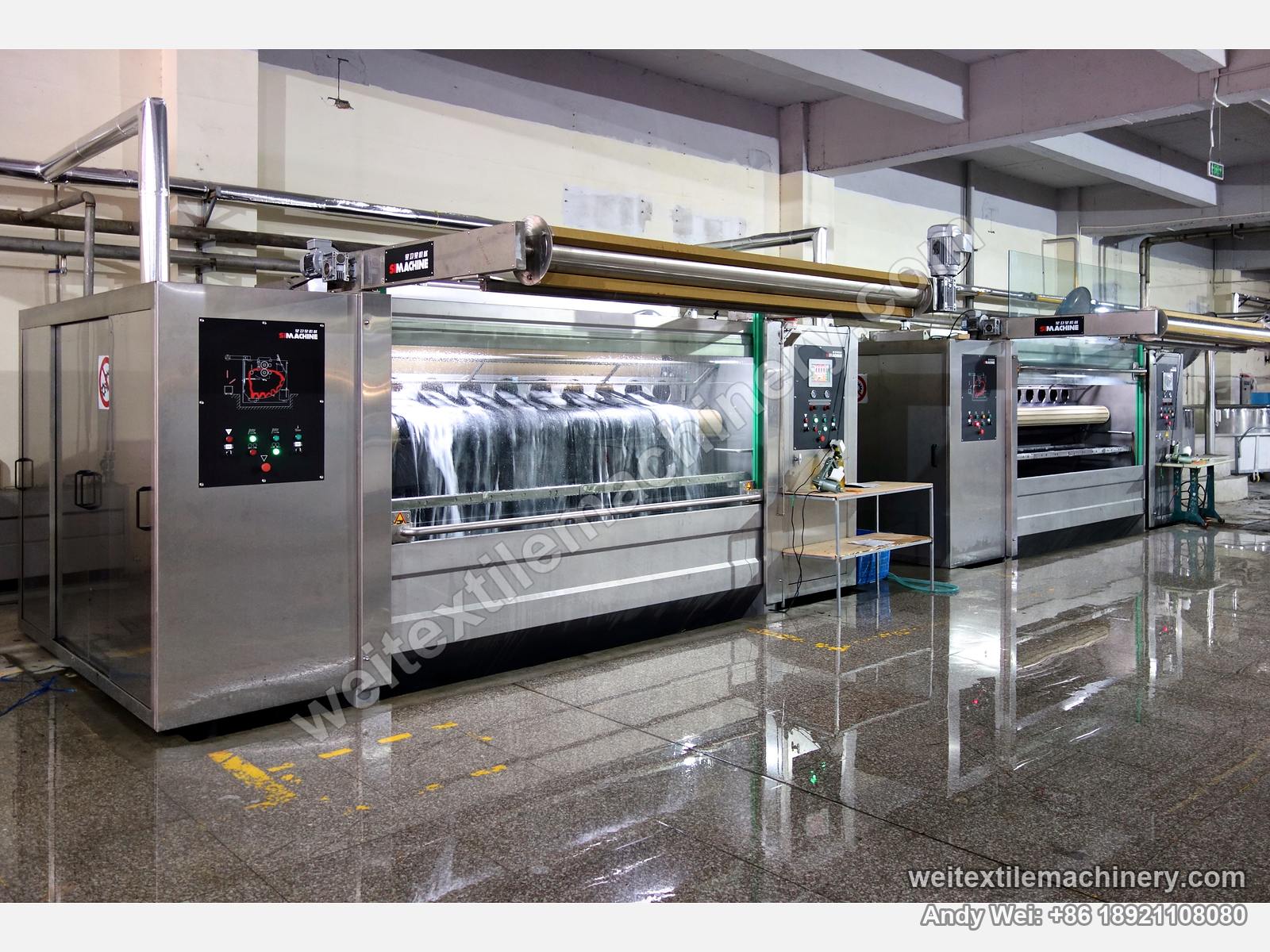
Full view at a customer mill
Key advantages
- Full-Width Squeeze Rollers · Multi-Rope Scouring — one pair of full-width squeeze rollers runs many fabric ropes side by side, sharing one trough and one process — batch capacity: 15 worsted pieces or 10 woollen pieces
- High-Pressure Spray Flushing — the spray bar has a spray port for every rope, so each is flushed at high pressure on its own — the liquor carrying the loosened oil is squeezed out at the nip straight afterwards
- QL High-Efficiency Scouring System — filtered circulation, steam heating, liquor-level control and automatic dosing brought together in one liquor circuit
- Split Liquor Outlet — a tray beneath the rollers collects what the nip squeezes out: recirculated to the trough while scouring, drained off directly while rinsing — soiled liquor stays out of the trough, and the rinse runs clear sooner
Fabric results (before / after)
Threading diagrams
QL High-Efficiency Scouring System
- Rope-by-Rope Spraying — the spray bar spans the machine width with one spray port per rope; there is one spray station ahead of the rollers and another at the rear of the trough
- Filtered Circulation — the circulation pump pressurises the liquor, and a filter takes out loose fibre before the liquor reaches the spray bar
- Automatic Liquor Temperature — a proportional steam valve regulates automatically and holds the spray liquor at the set temperature
- Liquor-Level Control — the level in the trough is held automatically at its set point for low-liquor-ratio running
- Automatic Dosing — auxiliaries are made up in the chemical tank and metered into the trough by the dosing pump to the set quantity
Product overview
The WPF-XN scours at a low liquor ratio: one pair of full-width squeeze rollers carries many fabric ropes side by side through a single trough — one load, one process. Batch capacity: 15 worsted pieces or 10 woollen pieces.
Each rope runs through a spray port of its own and is flushed at high pressure; the liquor, now carrying the loosened oil, is squeezed out at the roller nip straight afterwards, circuit after circuit. Filtering, heating and dosing of the liquor all take place automatically within the QL High-Efficiency Scouring System.
The fabric leaves the rollers fast enough to strike the pneumatic baffle plate at the rear before dropping back into the trough, one more mechanical action on top of squeezing: woollens gain a raised, fuller surface, fine worsteds a supple handle. Squeeze rollers are available in rubber or in wood.
Suited to rope scouring of all-wool and wool-blend fabrics, woven or knitted — worsted greige cloth is washed free of spinning oil, size and soil; woollens and wool knits are washed free of soap after milling. Fabric is loaded as rope or sewn into a tube.
Applications
Key specifications
| Batch capacity | 15 worsted pieces · 10 woollen pieces |
|---|---|
| Speed | 0–150 m/min |
| Fabric weight | 100–1,000 g per linear metre |
| Installed power | 30 kW |
| Overall dimensions (L × W × H) | 5,160 × 3,770 × 2,840 mm |
Full configuration notes, the complete feature list and selection advice — put together for your line and sent straight to you.
Request the full technical fileAll technical parameters stated in this document are measured under ideal operating conditions; actual performance may vary with fabric characteristics, process settings and on-site conditions. The manufacturer reserves the right to introduce technical improvements without prior notice.
Other machines for the same station
This station can be done in more than one way. Each suits a different case — choose by your fabric and output.
Wool-finishing machines used together on the same route
On the process route these wool-finishing machines sit on the same branch as this one and run in sequence — together they complete the step.
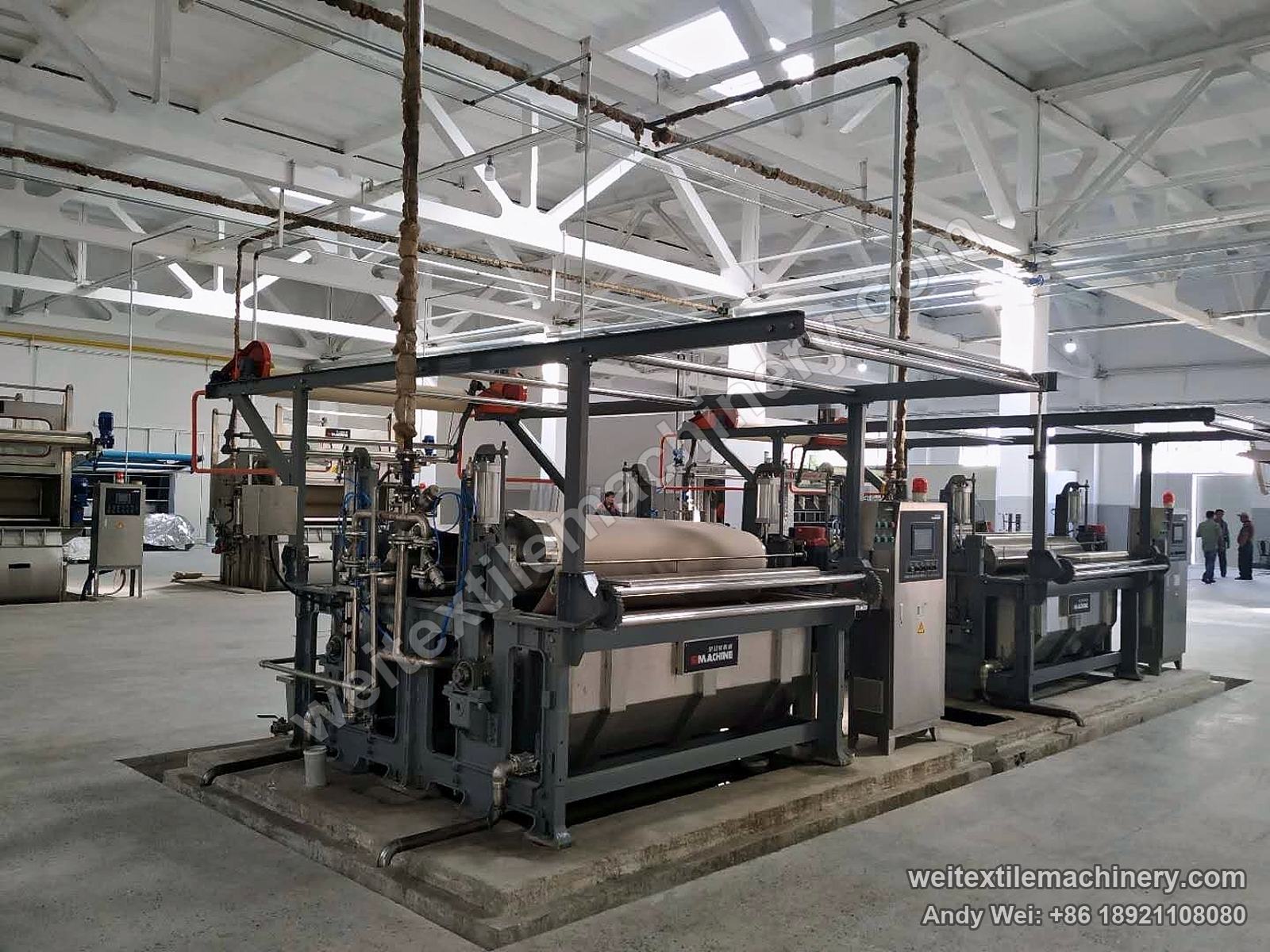
Cases with this machine
Mills running the WPF-XN, and acceptance days.
Common problems in wet finishing
Real questions from the mill floor — and how we answer them.
What is scouring in wool and textile finishing, and how is the process done?
Scouring is the wet-finishing step that removes impurities left on greige fabric — spinning lubricant, sizing agent, machine-oil stains and the like — and it is a different stage from raw-wool scouring, which removes…
Why must crabbing come before rope scouring or dyeing?
Pre-setting pays off downstream: crabbing before rope scouring and dyeing cuts shrinkage and fuzzing in the stages that follow, the weave staying defined.
How should scouring and milling be arranged — separate machines (mill then scour), a combined scour-and-mill machine, or mill then open-width scour?
All three set-ups are valid, and the choice depends on the process goal.
Should scouring be rope-form (WPF-XN) or open-width (WPF-JXPX)?
The choice comes down to whether the fabric is likely to crease under rope processing.
What does a wool scouring machine do?
A wool scouring machine's job is to wash greige fabric clean of the spinning oil, sizing agent, machine-oil stains and dust left on it, so the fabric reaches dyeing or the next finishing step clean and evenly treated.
For wool greige fabric — woven or knitted — should scouring and milling run as separate machines or one combined machine?
Either arrangement works — the choice comes down to how mixed each batch is.
What does rope scouring remove from woven wool fabric?
A rope scouring machine mainly removes spinning lubricant, warp sizing agent, machine-oil stains picked up during production, and dust and loose surface soil.
Is bio-scouring different from QL's mechanical rope scouring?
The two clean fabric by different mechanisms.
What can the WPF-XN do for your line?
Tell us your fabric, weight and output — we will come back with a process proposal and a quotation.