
Wool Milling Machine
WPF-1S
Wool Milling Machine · Engineered with the QL Rope-Opening Airflow System
The machine, up close
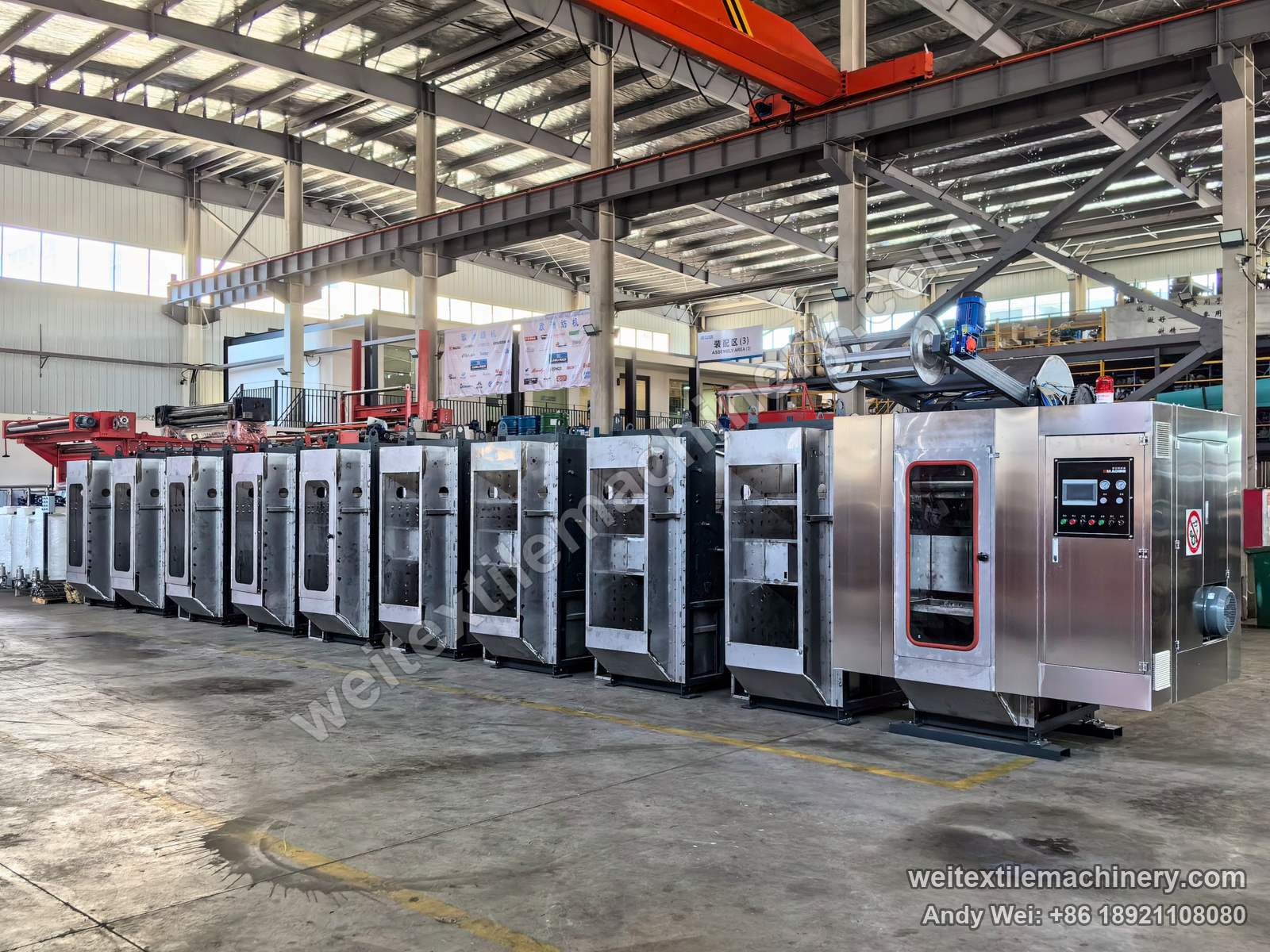
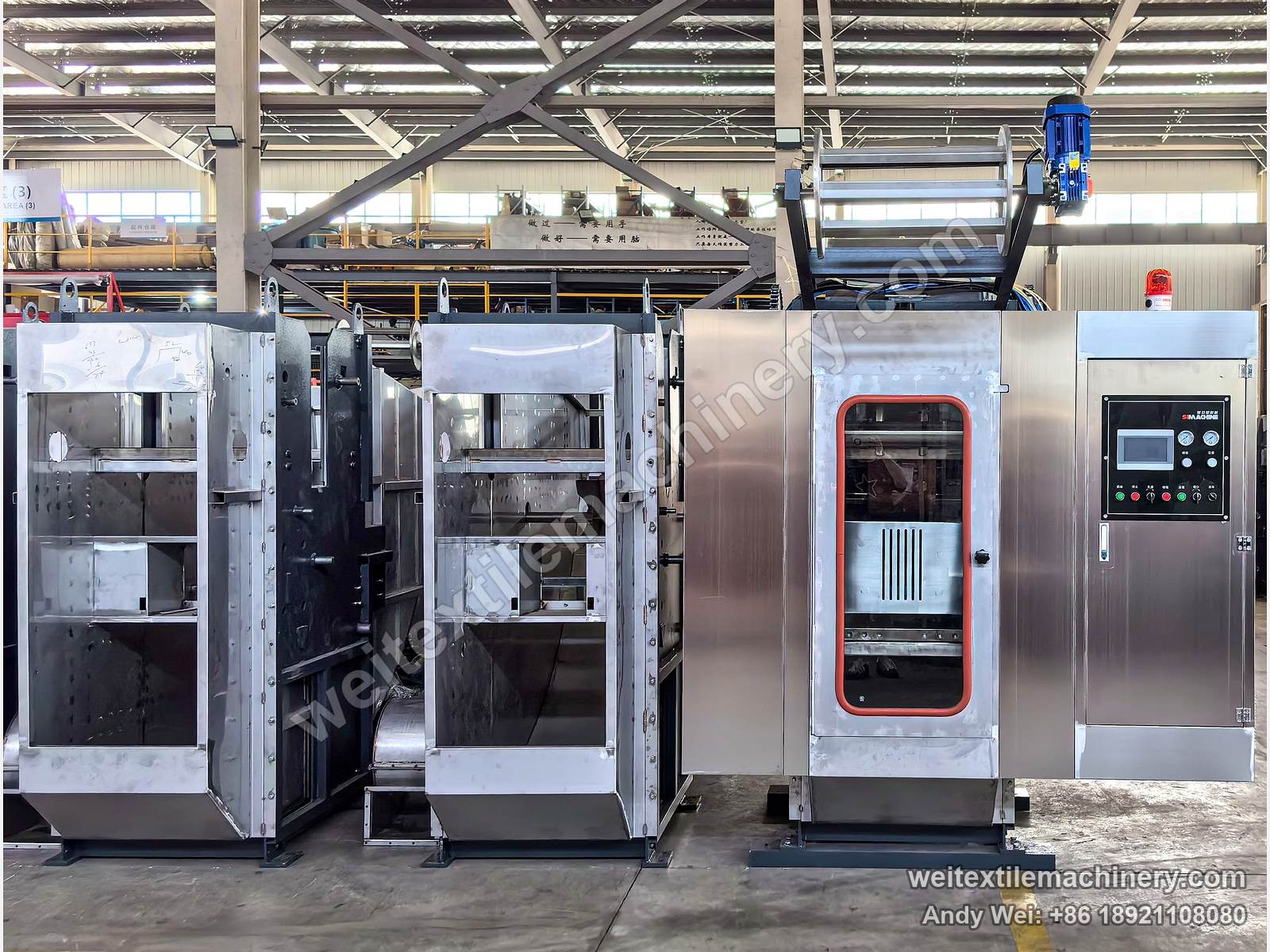
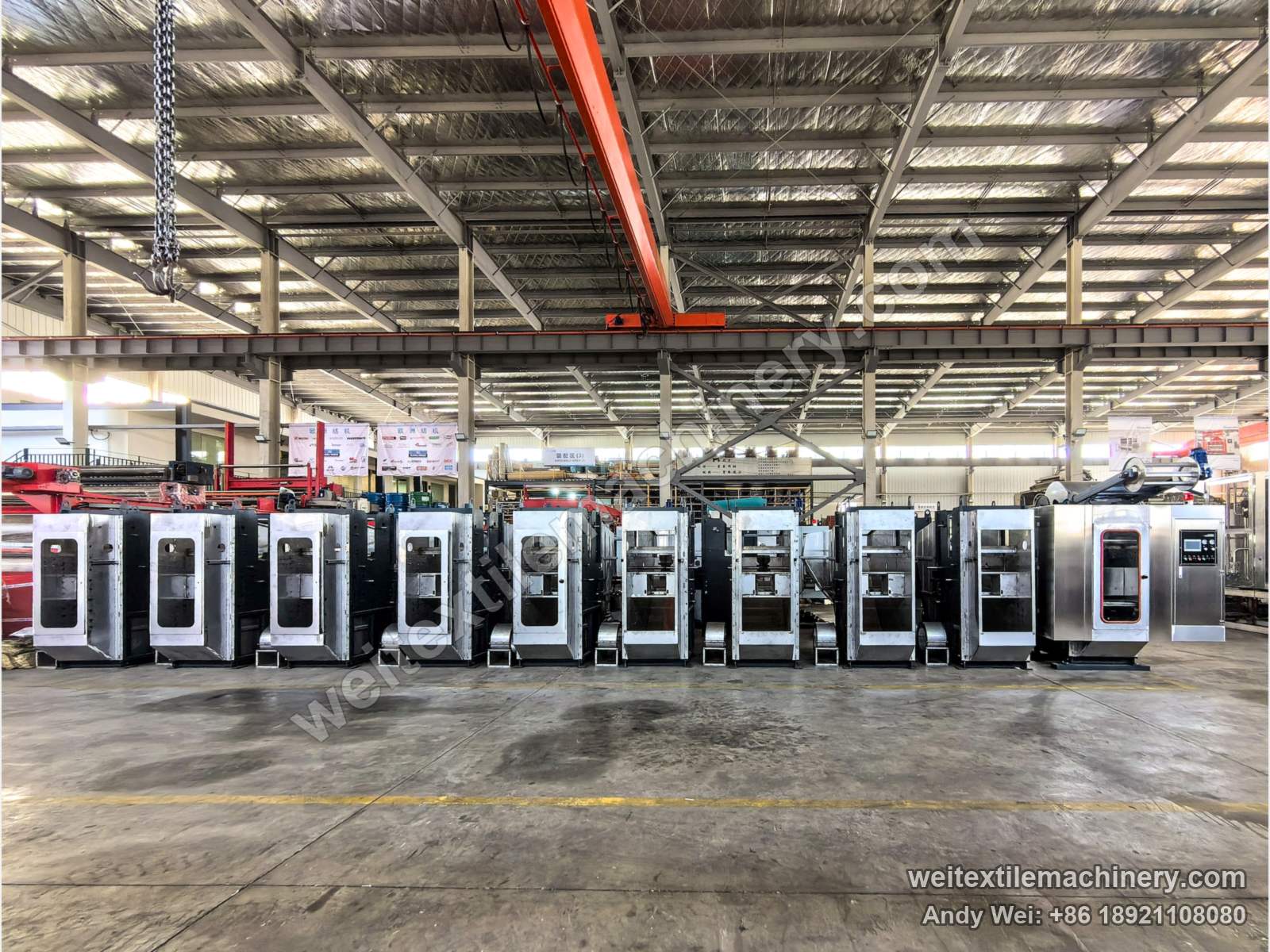
Full view, drum and motor on top
Key advantages
- QL Rope-Opening Airflow System — a continuous air stream blows the fabric rope open and its folds keep shifting — fabric spread out, fewer creases
- Wooden Milling Rollers — roller surfaces in specially selected premium hardwood — gentle milling action, long service life
- Pneumatic Milling Plate · Motor-Driven Jaws — the milling plate adjusts shrinkage in length, the jaws adjust shrinkage in width — length and width each with its own adjustment
- On-Machine Length Measurement — mark the piece, run one circuit and the loop length shows on the touchscreen — loop length read at the machine
Fabric results (before / after)
Threading diagrams
QL Rope-Opening Airflow System
- Airflow Ahead of the Rollers — the air outlet sits ahead of the milling rollers, facing the rising fabric rope
- Continuous Opening — throughout the cycle the air stream keeps blowing the rope open, and its folds keep shifting
- Adjustable Air Volume — the fan has its own inverter-controlled drive; air volume is set at the touchscreen
Product overview
The WPF-1S brings airflow into the milling cycle: a continuous air stream blows the fabric rope open and spreads it out, so its folds keep shifting. Fewer milling creases.
The pneumatically loaded milling plate adjusts shrinkage in length; the motor-driven jaws adjust shrinkage in width; on-machine length measurement reads the loop length of the piece after a single circuit. Length and width each with its own adjustment, loop length read at the machine.
Suited to rope milling (fulling) of woollen, semi-worsted and knitted fabrics; after milling, the fabric goes on to a scouring machine to be washed free of the milling agent.
Applications
Key specifications
| Speed | 0–200 m/min |
|---|---|
| Main motor power | 11 kW |
| Fan motor power | 3 kW |
| Compressed air | ≥ 4 bar |
| Machine weight | approx. 2.2 t |
| Overall dimensions (L × W × H) | 3,767 × 2,720 × 2,200 mm |
Optional features
- Shrinkage Detection Sensor
Full configuration notes, the complete feature list and selection advice — put together for your line and sent straight to you.
Request the full technical fileAll technical parameters stated in this document are measured under ideal operating conditions; actual performance may vary with fabric characteristics, process settings and on-site conditions. The manufacturer reserves the right to introduce technical improvements without prior notice.
Other machines for the same station
This station can be done in more than one way. Each suits a different case — choose by your fabric and output.
Wool-finishing machines used together on the same route
On the process route these wool-finishing machines sit on the same branch as this one and run in sequence — together they complete the step.
Common problems in wet finishing
Real questions from the mill floor — and how we answer them.
What is fulling (milling) and why do woollen fabrics need it?
Fulling (milling) is the process where, under wet heat and mechanical pressing and rubbing, the scales on wool fibres interlock and the fabric shrinks irreversibly into a felted structure.
How should scouring and milling be arranged — separate machines (mill then scour), a combined scour-and-mill machine, or mill then open-width scour?
All three set-ups are valid, and the choice depends on the process goal.
What is the principle behind wool milling (fulling), and how much difference does it make?
Milling (fulling) works through wool's directional frictional effect: under wet mechanical action, the scales on the fibre surface grip like a ratchet and drive the fibres toward their root, causing them to migrate…
Do worsted fabrics need milling?
No — not all of them. Worsted fabrics are prized for a clean, clearly defined weave, and mainstream worsted qualities skip milling altogether, since felting would obscure the weave and add bulk, working against what…
How do I operate a wool milling machine correctly, and what should I watch for?
Operating a wool milling machine covers pre-start checks, setting pressure and fabric speed to the material, monitoring shrinkage and temperature-humidity during the run, and cleaning and blanket maintenance at…
Can a wool milling machine replace a drying machine?
No — a wool milling machine cannot replace a dryer.
What is a wool milling (fulling) machine?
A wool milling (fulling) machine is a wet-finishing machine that works woollen fabric in a liquor bath under repeated mechanical squeezing and friction, bringing about controlled felting.
What is wool's felting property (felt-ability)?
Wool's felting property is its fibres' tendency to felt and shrink on their own under wet mechanical action.
What can the WPF-1S do for your line?
Tell us your fabric, weight and output — we will come back with a process proposal and a quotation.