
Continuous Pressure Decatizing Machine
WPF-LXZN-P
Pressurised Continuous Decatizing Machine · Engineered with the QL Pneumatic Soft-Seal System
The machine, up close
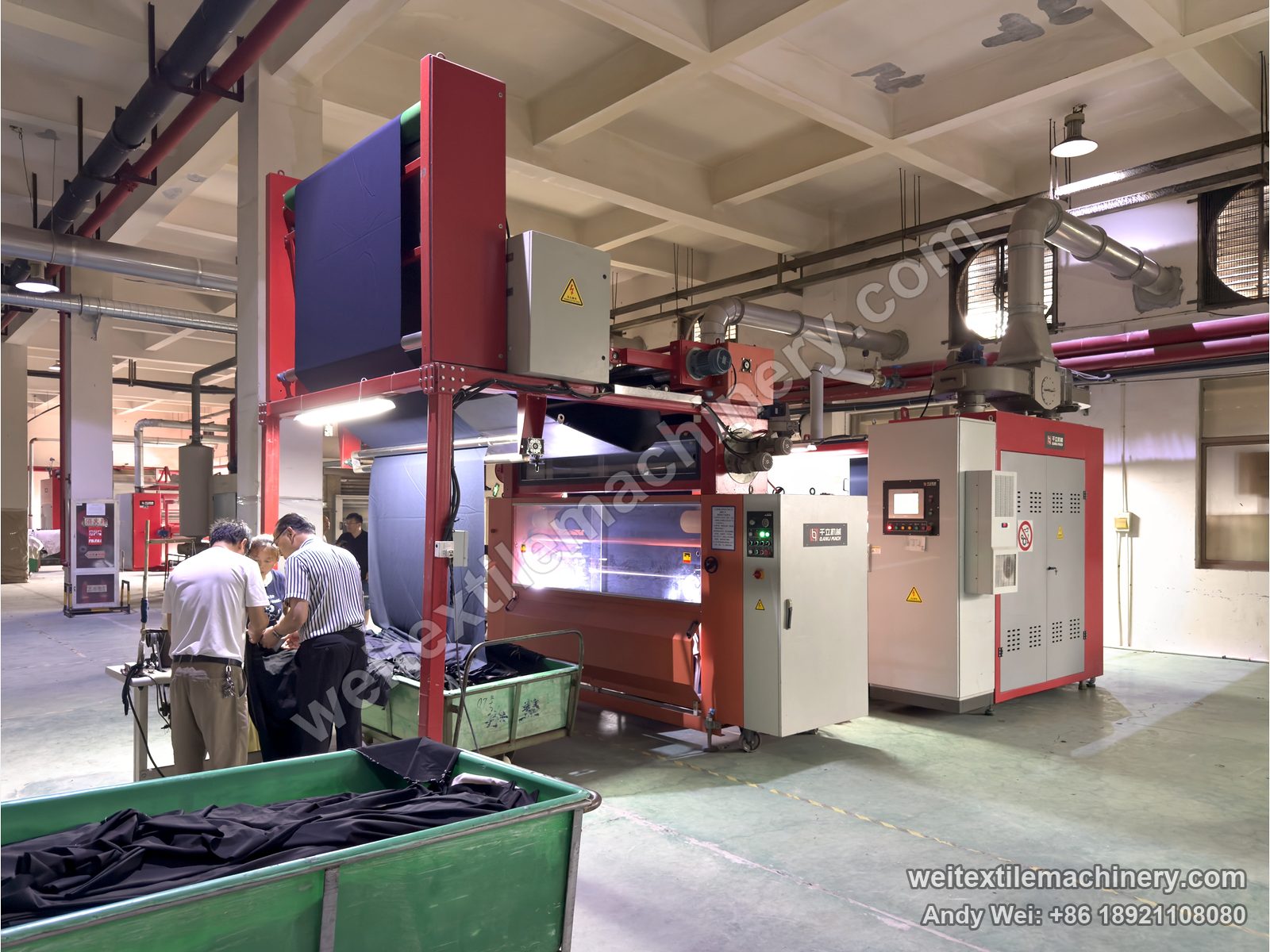
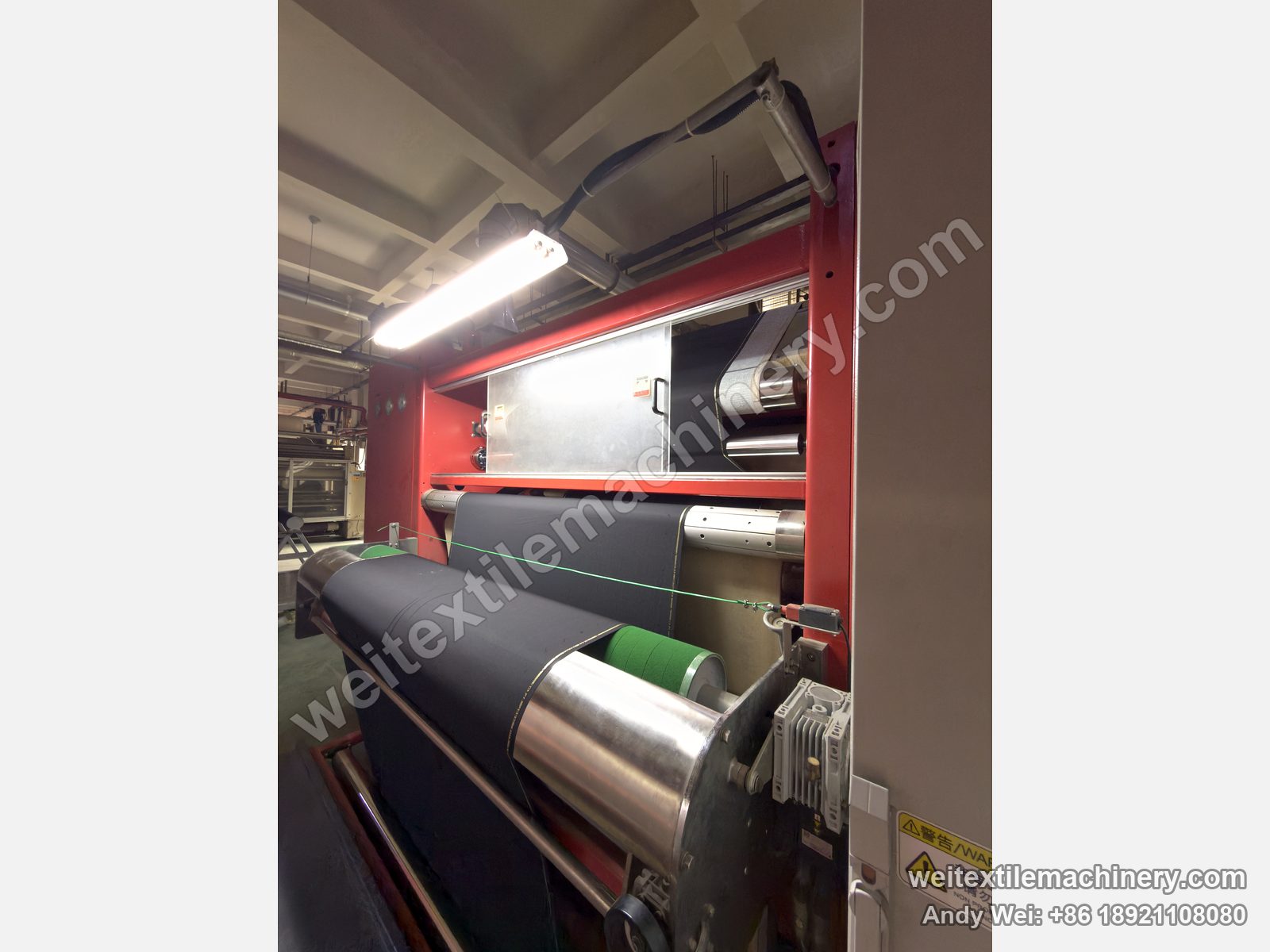
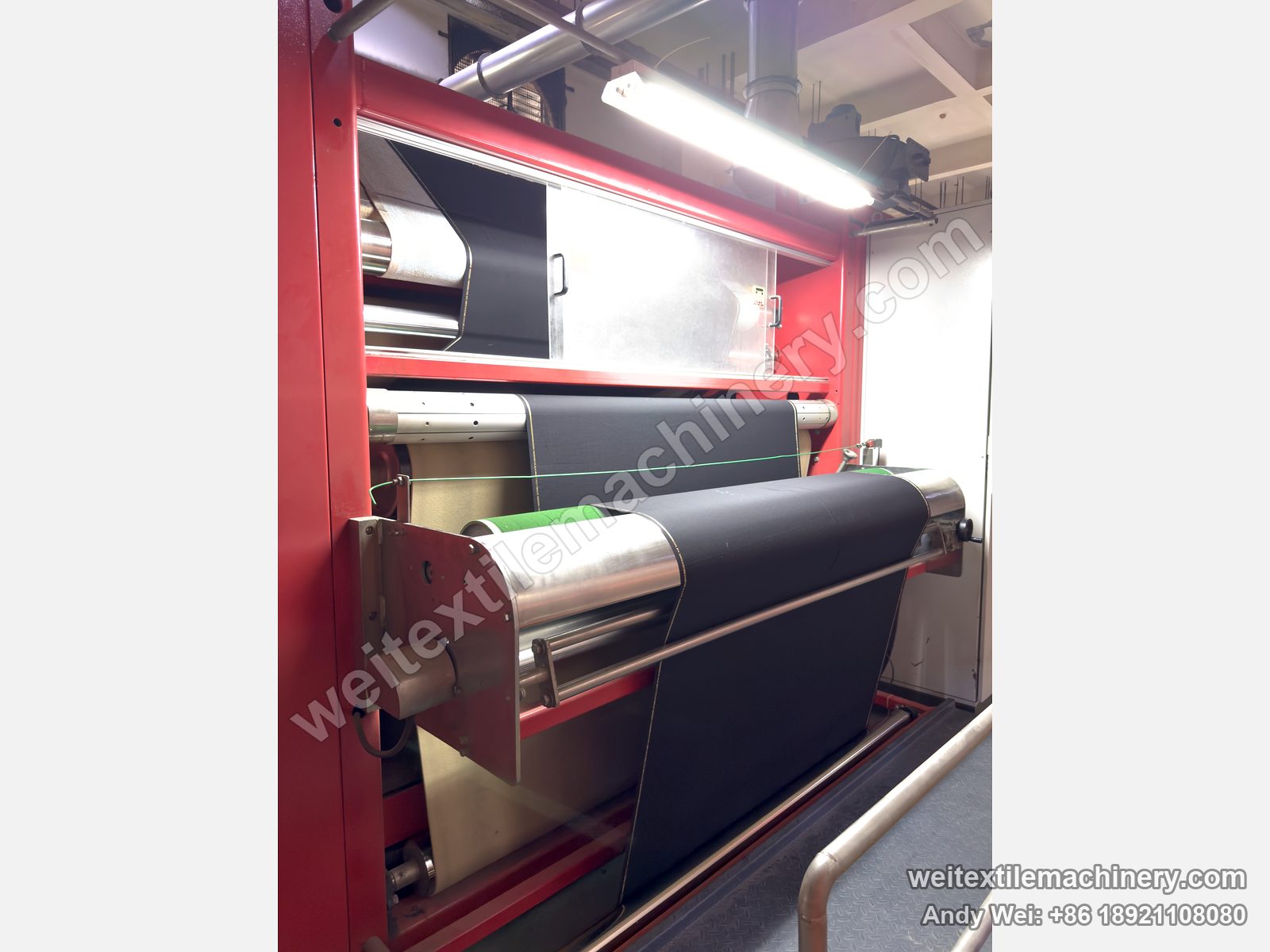
In operation at a customer mill
Key advantages
- Pressurised Steaming Vessel (0–3 bar) — under pressure, saturated steam within the vessel acts on the fabric directly, the pressure infinitely settable; continuous fabric travel delivers light-kier-grade setting depth
- QL Pneumatic Soft-Seal System — an air bladder and special-grade material together form the soft seal, vessel pressure held constant with no leakage; no rigid contact elements in the felt path
- Woven-and-Knitted Tension Control — independent, precise tension regulation throughout for both woven and knitted, particularly effective on elastane-bearing stretch fabrics; the knitted configuration adds a dedicated, accurate selvedge-uncurling action, eliminating the process unevenness that curling edges cause
- Rapid Residual-Steam Clearing — at the delivery end and the pressure boundary, residual steam and the condensate raised by the pressure differential are cleared at once — the fabric is set as it leaves and does not re-condense off the machine; either fan suction or electric-heat drying may be configured to process preference
Fabric results (before / after)
Threading diagrams
QL Pneumatic Soft-Seal System
- Air-Bladder Soft Seal — air bladder and special-grade material conform flexibly to the junction between the steaming tank and the felt belt, vessel pressure held constant with no leakage; with no rigid contact elements in the felt path, the felt is spared abnormal localised wear
- Heat-Resistant Sealing Boundary — the special-grade material holds the seal while sharply reducing wear on the felt
- Outboard Boundary Suction — a suction fan at the outer edge of the sealing boundary intercepts, as a second stage, any trace steam that may escape
Product overview
The WPF-LXZN-P raises continuous decatizing from atmospheric to pressurised operation. Under pressure, saturated steam acts on the fabric directly — at the throughput of continuous travel it reaches light-kier-grade setting depth, so a single pass attains the dimensional stability that once required a separate kier decatizing stage.
Beyond dimensional stability, hand and appearance are set in the same pass — the finished cloth carries a lasting, natural lustre and brighter colour, a crisp body that stays firm yet never stiff, improved drape and excellent crease recovery.
The range of qualities that can be set reaches well beyond atmospheric continuous decatizing — from lightweight fabrics to heavy, high-mass constructions, from pure wool to every class of blend, all are thoroughly set. Woven and knitted alike, elastane-bearing stretch fabrics included.
Suited to worsted, carded, silk, viscose and every class of synthetic-fibre blend — operating as a standalone continuous decatizing finisher, or as high-speed pre-treatment before kier decatizing and final treatment after it, flexibly integrated into the wool finishing line.
Applications
Key specifications
| Working width | 1,800–2,200 mm |
|---|---|
| Mechanical speed | 4–40 m/min |
| Working speed | 4–40 m/min |
| Vessel steam pressure | 0–3 bar |
| Saturated steam pressure | 6 bar |
| Compressed-air supply pressure | 6 bar |
| Installed power | 55 kW |
| Average steam consumption (approx.) | 500 kg/h |
| Average noise level | <79 dB(A) |
Optional features
- Matt roller — replaces the standard mirror-finish roller, giving the fabric a matt appearance
- Fabric humidifying unit — enhances steam penetration depth, delivering a stronger setting and fuller hand
- Fully digital production-management system — daily output, felt running hours, electricity consumption and steam flow recorded across four data dimensions and automatically aggregated; ERP / MES upper-system interfaces are pre-configured, with bidirectional process-data transfer fully supporting product-level traceability
Full configuration notes, the complete feature list and selection advice — put together for your line and sent straight to you.
Request the full technical fileAll technical parameters stated in this document are measured under ideal operating conditions; actual performance may vary with fabric characteristics, process settings and on-site conditions. The manufacturer reserves the right to introduce technical improvements without prior notice.
Other machines for the same station
This station can be done in more than one way. Each suits a different case — choose by your fabric and output.
Common problems in dry finishing
Real questions from the mill floor — and how we answer them.
How do I choose among the four decatizing methods — discontinuous, continuous, continuous-pressure, or autoclave (KD)?
Choose a decatizing method by throughput and set depth.
Polishing and steam preshrinking are already done — why is decatizing still necessary, and can this step be skipped?
No, decatizing cannot be skipped.
Can I drop the kier decatizing step and let a continuous machine do that work?
Under 0–3 bar, saturated steam acts on the fabric directly, and a single pass attains the dimensional stability that once required a separate kier decatizing stage — light-kier-grade setting depth at continuous…
For elastane knits, how do I avoid curling and uneven treatment during decatizing?
The knitted configuration adds a dedicated, accurate selvedge-uncurling action, eliminating the process unevenness that curling edges cause.
Does pressurised decatizing leak, wear out seals quickly and cost more to maintain?
The seal is an air bladder and special-grade material conforming flexibly to the junction between steaming tank and felt belt, holding vessel pressure constant with no leakage; a suction fan at the outer edge of the…
Is crabbing the same thing as decatising or steaming yarn?
Crabbing, decatizing and yarn steaming are three different finishing processes: yarn steaming treats yarn, crabbing sets fabric in hot water, decatizing sets it with steam.
After decatizing, does the fabric lose its set shape after just one wash?
No — decatizing does not wash out after a single laundering, but its durability has levels.
How do preshrinking and decatizing relate to each other — can I do just one and skip the other?
Pre-shrinking and decatizing are two sequential steps on the line, not an either-or choice.
What can the WPF-LXZN-P do for your line?
Tell us your fabric, weight and output — we will come back with a process proposal and a quotation.