
Continuous Decatizing Machine
WPF-LXZN
Continuous Intelligent Energy-Saving Decatizing Machine · Equipped with QL’s proprietary Decatizing Uniformity Technology
The machine, up close
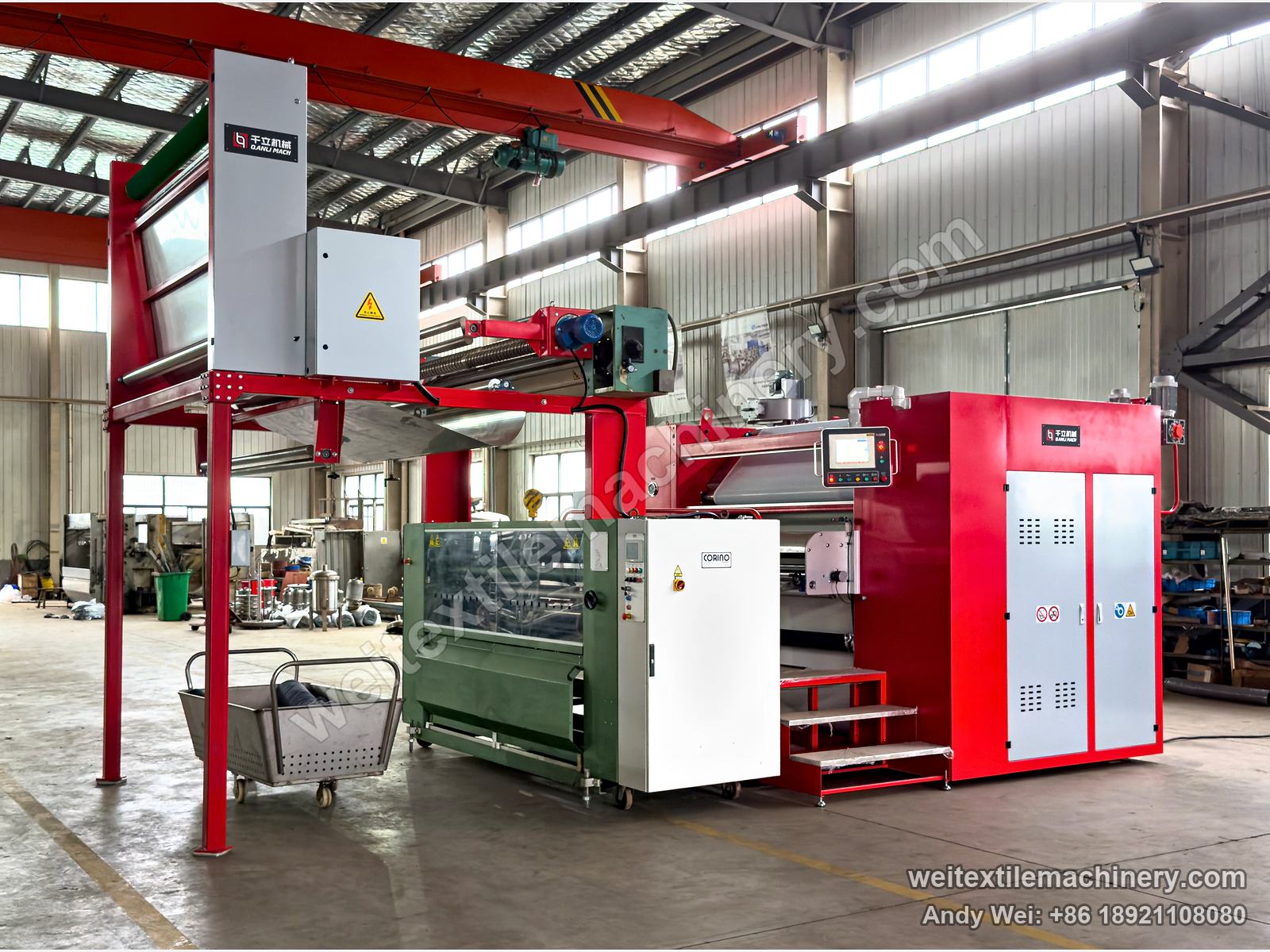
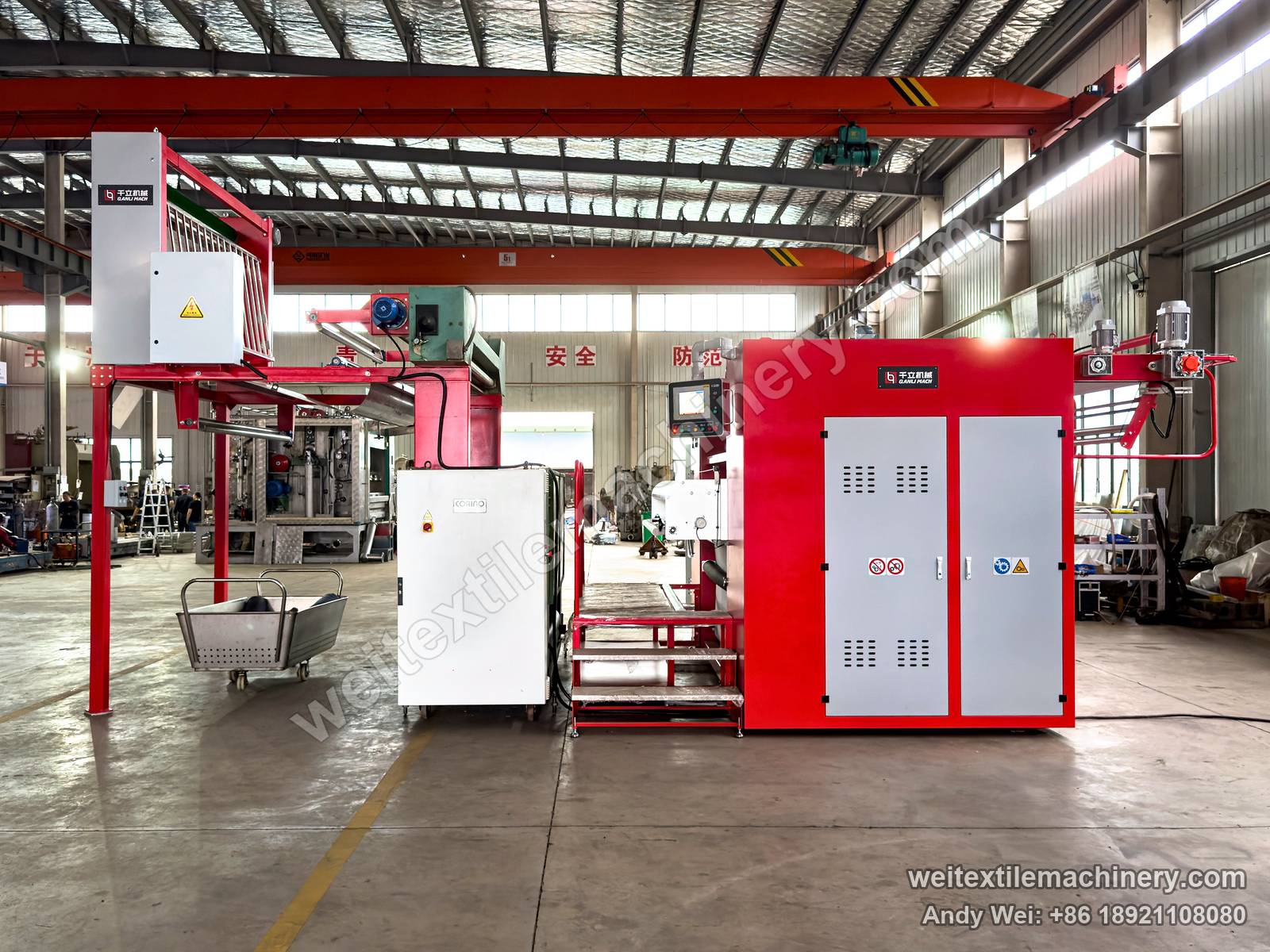
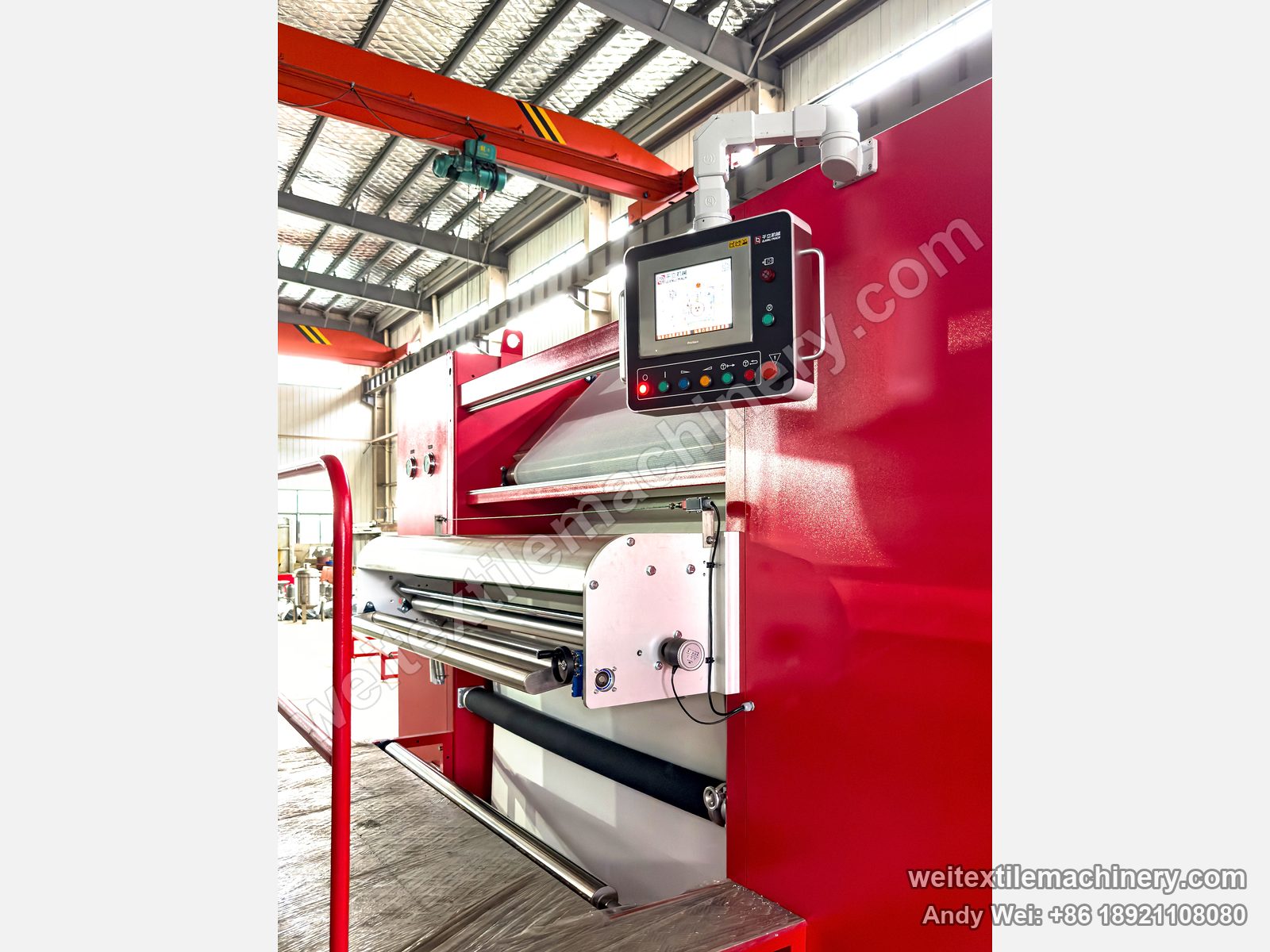
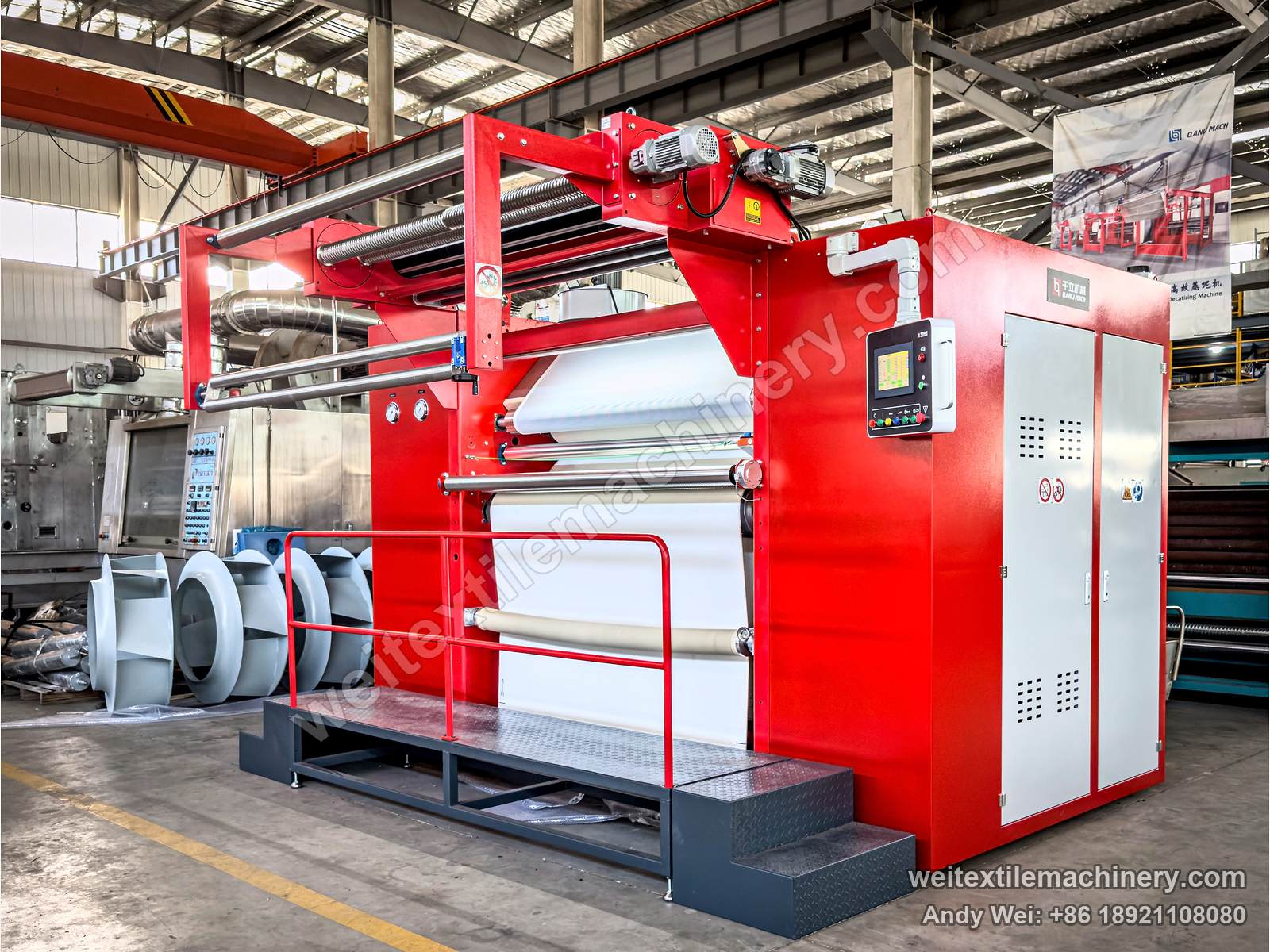
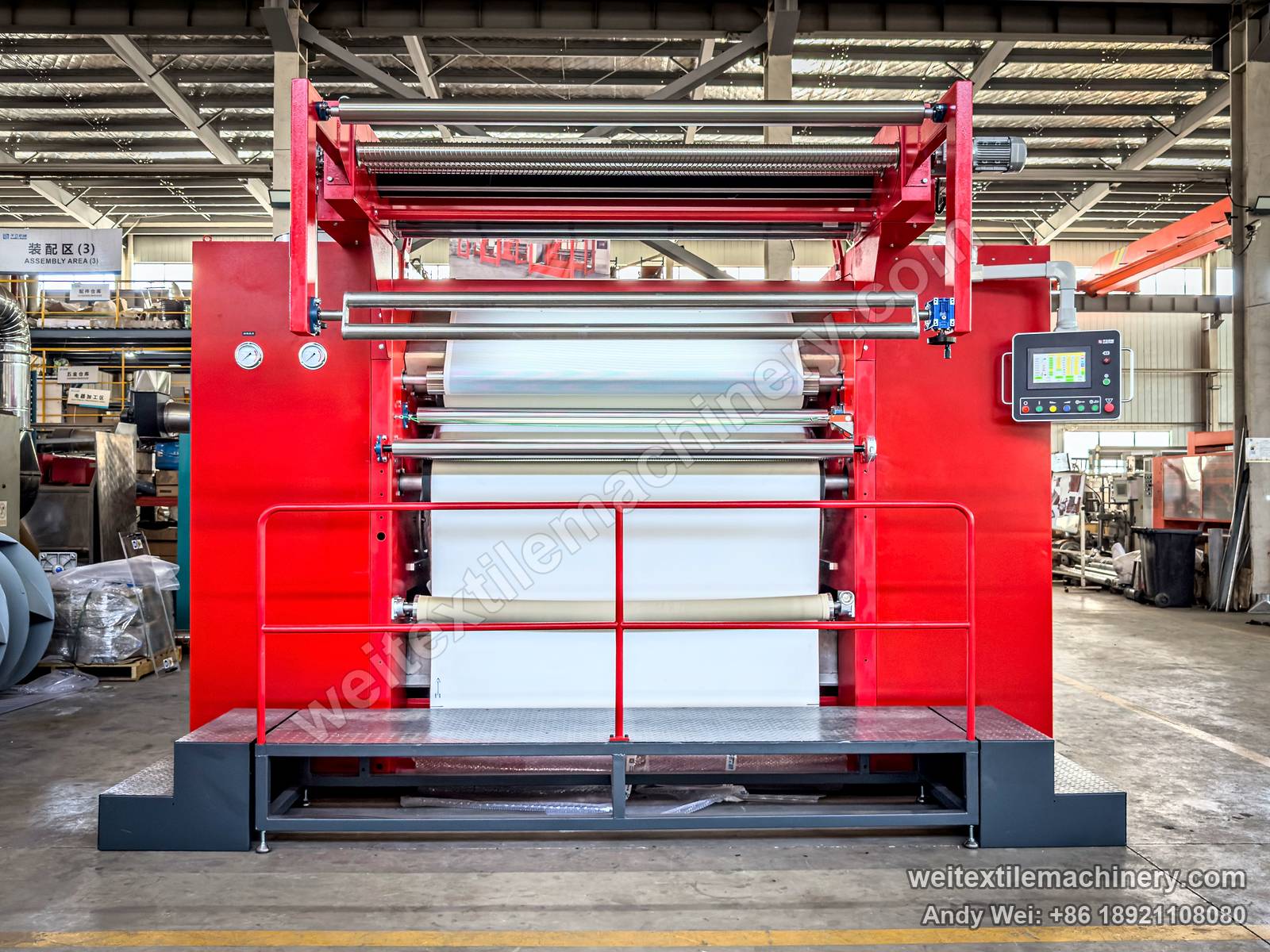
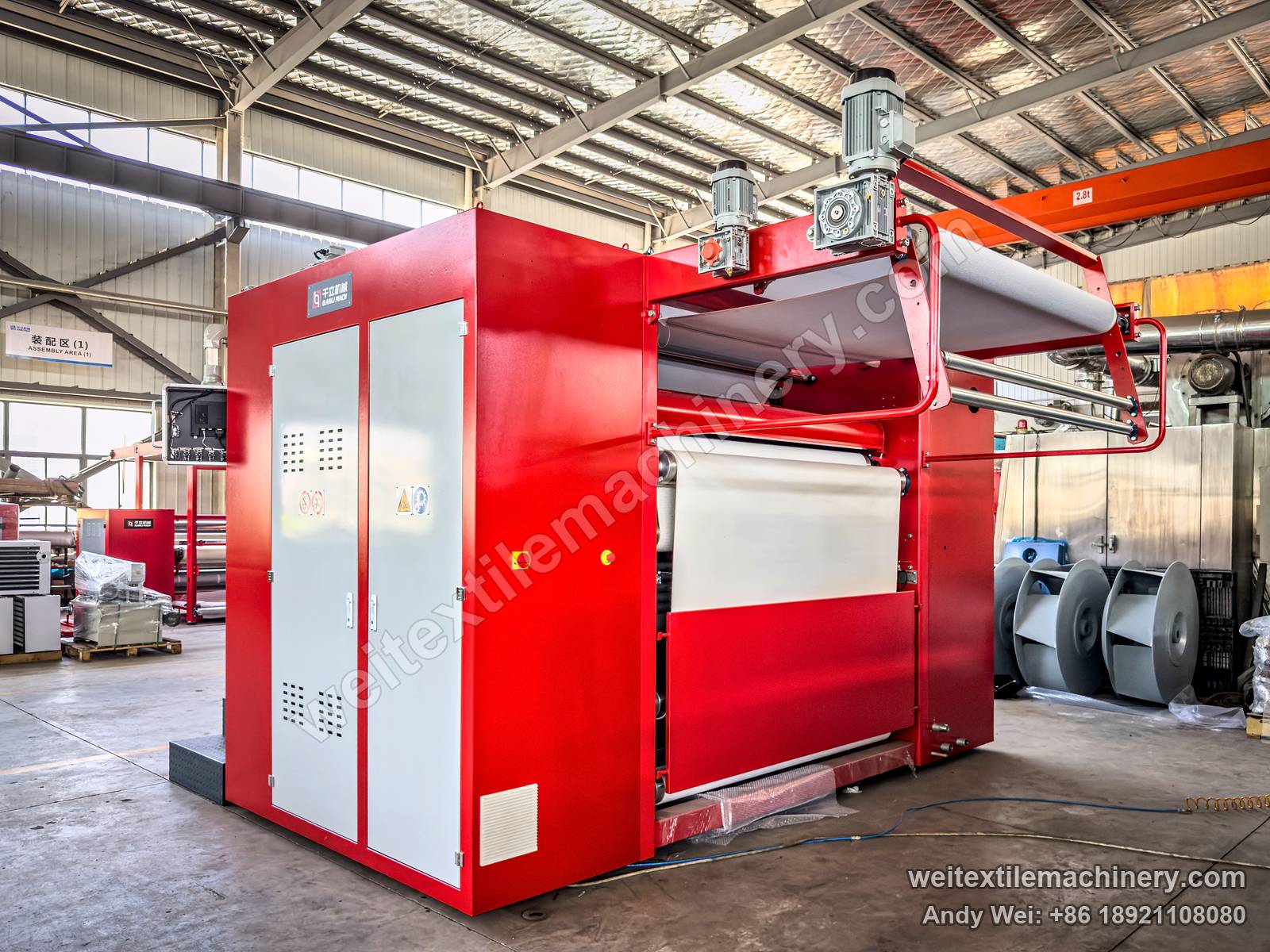
Front view, woven fabric
Key advantages
- Roller-and-felt continuous fabric path — uninterrupted in-and-out fabric flow, suited to high-takt continuous production; capable of handling fringed scarves, shawls, and other categories that discontinuous (batch) decatizing cannot process
- QL proprietary Decatizing Uniformity Technology — eliminates left-centre-right shading, eliminates head-to-tail piece variation, raises steam utilisation
- Proportional-valve steam supply — constant pressure, stable flow, automatic consumption metering
- Enlarged steam-rise chamber — extended steam dwell time, substantially enhanced fabric setting effect
Fabric results (before / after)
Threading diagrams
QL Decatizing Uniformity Technology
- Eliminates left-centre-right shading — uniform decatizing depth across the full fabric width
- Eliminates head-to-tail piece variation — batch-to-batch consistency in bulk production
- Significantly raises steam utilisation — reduced steam consumption per linear metre
Product overview
The WPF-LXZN represents a new-generation evolution of the continuous decatizing process, engineered for the era of full-width uniformity. Equipped with QL’s proprietary Decatizing Uniformity Technology, the machine can be flexibly deployed at multiple positions on the wool finishing line — operating as a standalone continuous decatizing finisher, as a pre-treatment stage prior to discontinuous (batch) decatizing, or as a post-treatment stage following it. The technology fundamentally eliminates the long-standing issues of left-centre-right shading, head-to-tail piece variation, and batch-to-batch inconsistency that have defined continuous decatizing.
Engineered for the multi-product mill — worsted, carded, silk, and synthetic-blend fabrics, woven and knitted — covered on a single platform across the full finishing portfolio. For fringed scarves, shawls, and similar continuous-decatizing-only categories, this machine is the sole viable process route — discontinuous (batch) decatizing equipment cannot process them.
Applications
Key specifications
| Working width | 1,700 mm |
|---|---|
| Felt sleeve width | 1,950 mm |
| Decatizing drum diameter | 1,270 mm |
| Operating speed | 10 – 35 m/min |
| Installed power | 45 kW |
| Average steam consumption (4–5 bar) | 400 – 500 kg/h |
| Compressed air consumption (7–8 bar) | 100 NL/h |
| Average noise level | <80 dB(A) |
| Dimensions (L × W × H) | 4,900 × 4,200 × 3,300 mm |
Optional features
- Fabric humidifying unit — enhances steam penetration depth, delivering a stronger setting and fuller hand
Full configuration notes, the complete feature list and selection advice — put together for your line and sent straight to you.
Request the full technical fileAll technical parameters stated in this document are measured under ideal operating conditions; actual performance may vary with fabric characteristics, process settings and on-site conditions. The manufacturer reserves the right to introduce technical improvements without prior notice.
Other machines for the same station
This station can be done in more than one way. Each suits a different case — choose by your fabric and output.
Pre-owned machines for this station
Pre-owned European machines for the same station — fully rebuilt to order, and upgraded if you wish.
Sperotto Rimar Multidecat 2.0 Continuous decatizing machine
Continuous decatizing machine
2 units · Italy
Pre-owned →Sperotto Rimar MD-M Continuous decatizing machine
Continuous decatizing machine · 1.7 m
2 units · Italy
Pre-owned →Bisio Vapodec Continuous decatizing machine
Continuous decatizing machine · 1.7 m
3 units · Italy
Pre-owned →M-Tec Superfinish GFP 800/900 Continuous pressing and decatizing machine
Continuous pressing and decatizing machine · continuous belt pressing · downstream decatizing
1 unit · Germany
Pre-owned →Common problems in dry finishing
Real questions from the mill floor — and how we answer them.
How do I choose among the four decatizing methods — discontinuous, continuous, continuous-pressure, or autoclave (KD)?
Choose a decatizing method by throughput and set depth.
How does the throughput of continuous decatizing compare with discontinuous (large-drum) decatizing, and how should I choose?
Choose by fabric and finish first, then by line pace.
What causes side-to-side color unevenness and head-to-tail piece variation after decatizing, why are continuous decatizing machines more prone to it, and does a large-drum discontinuous decatizing machine solve it?
Shade and end-to-end variation mostly come from uneven steam distribution — in a conventional continuous decatizing setup, fast fabric travel means short steam contact, and condensate dripping inside the steam-rise…
Polishing and steam preshrinking are already done — why is decatizing still necessary, and can this step be skipped?
No, decatizing cannot be skipped.
Can silk, man-made fibres and elastane fabrics run on this machine?
Pure silk and silk blends, and polyester / viscose / polyester-viscose blends, are within the machine's scope, covered on the same platform as worsted and carded fabrics.
Steam contact is short in a continuous machine — does it really set as well as an old batch decatizer?
The steam-rise chamber is enlarged, which extends steam dwell time and substantially enhances the setting effect.
Is crabbing the same thing as decatising or steaming yarn?
Crabbing, decatizing and yarn steaming are three different finishing processes: yarn steaming treats yarn, crabbing sets fabric in hot water, decatizing sets it with steam.
After decatizing, does the fabric lose its set shape after just one wash?
No — decatizing does not wash out after a single laundering, but its durability has levels.
What can the WPF-LXZN do for your line?
Tell us your fabric, weight and output — we will come back with a process proposal and a quotation.