
Wet Brushing and Setting Machine
WPF-SSMDX
Wet Brushing and Setting Machine · Engineered with the QL Twin-Zone Wet Brushing System
The machine, up close
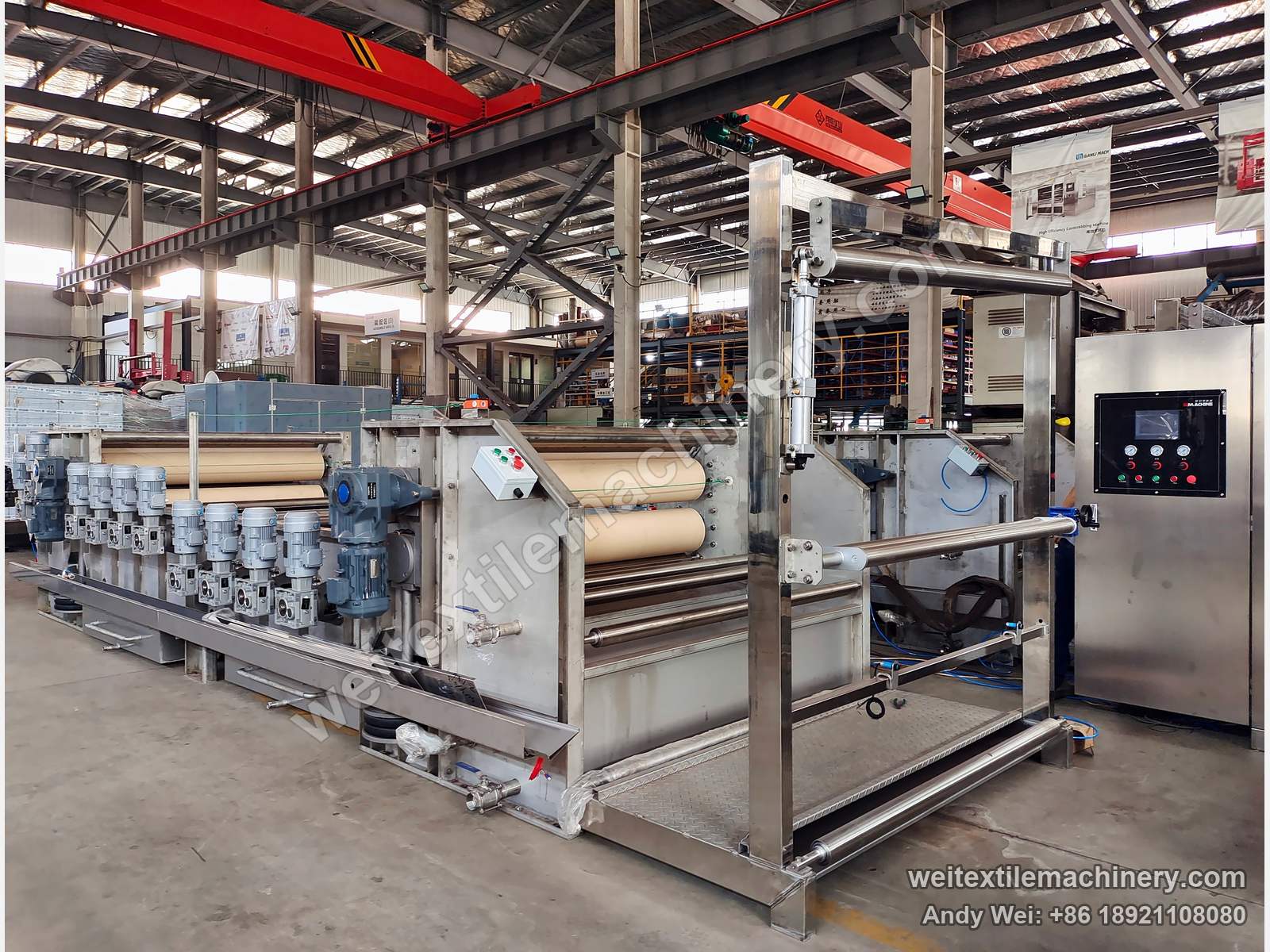
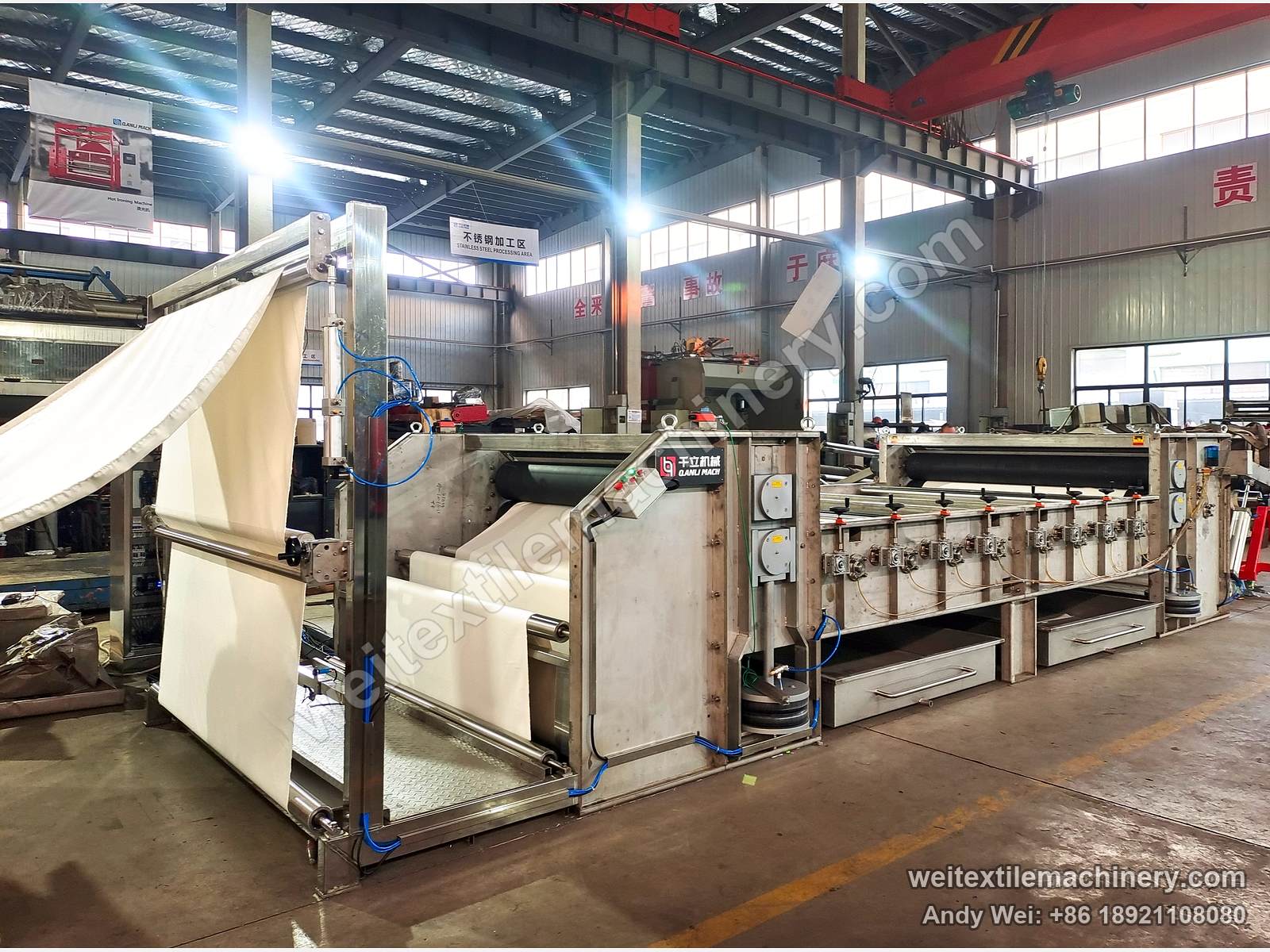
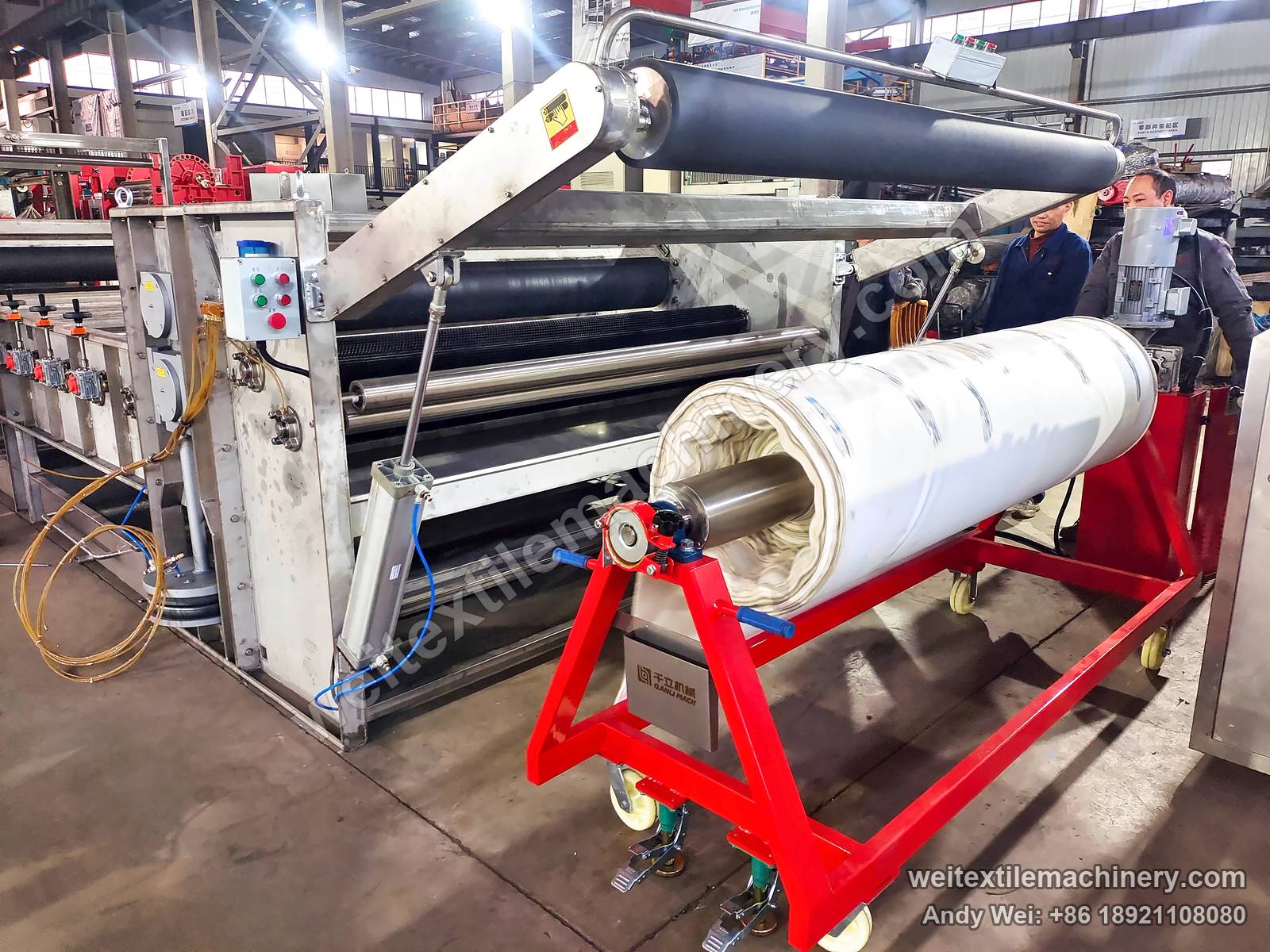
Full view
Key advantages
- QL Twin-Zone Wet Brushing System — four brushes in the lower zone and four in the upper; the fabric passes once and is brushed on one side, then on the other — double-face cloths finished in a single pass
- Delivery Cleaning Brushes · Fibre Collection — after the delivery squeezer, one high-speed cleaning brush above and one below clear loose fibre from the fabric before winding; fibre brushed off by the lower brushes falls into collecting drawers that pull out for emptying
- Heavy-Duty Squeezers at Entry and Delivery — the entry squeezer removes surplus water and auxiliaries and returns the liquor to the trough; the delivery squeezer sets the wet pick-up. Air-spring loading, adjustable pressure
- Direct-Coupled Brushes · Individual Inverter Drives — every brush has its own inverter-controlled motor on a direct coupling; speed is set brush by brush, and each brush can be switched on or off
Fabric results (before / after)
Threading diagrams
QL Twin-Zone Wet Brushing System
- Lower Zone First, Upper Zone Second, Four Brushes Each — the fabric is brushed on its underside in the lower zone, then on its upper side in the upper zone; face and back each pass four brushes
- One Squeezer Before, One After — surplus water and auxiliaries are squeezed out ahead of the brushes; the fabric is squeezed again after brushing and then wound
- Set Brush by Brush — speed, brush distance and on/off are set separately for every brush
Product overview
After impregnation and squeezing, the fabric runs over four lower brushes and then under four upper brushes — in a single pass, the WPF-SSMDX brushes and lays the pile on face and back while the fabric is wet. On double-face cloths each side passes four brushes, and the piece is finished in one pass.
All eight brushes are driven individually, each with its own speed and brush distance; one heavy-duty squeezer stands ahead of the brushing zones and one after them. Loose fibre from the lower brushes drops into collecting drawers, and two high-speed cleaning brushes clear the fabric surface once more before winding.
For woollen pile fabrics in wool, cashmere and their blends — chiefly double-face cloths and overcoatings with a laid pile. The machine works after crabbing and before drying, in combination with teasel raising.
Applications
Key specifications
| Roller face width | 1,800 mm |
|---|---|
| Maximum working width | 1,600 mm |
| Fabric speed | 0–24 m/min |
| Brush arrangement | 4 upper + 4 lower brushes; 2 delivery cleaning brushes |
| Brush speed | 0–325 rpm |
| Maximum roll diameter | 1,000 mm |
| Compressed-air supply | ≥ 4 bar |
| Installed power | 28 kW |
| Overall dimensions (L × W × H) | 8,747 × 2,505 × 2,283 mm |
Optional features
- Roller Face Width 2,200 mm — for fabrics 2,000 mm wide
- Brush Arrangement — other numbers of upper and lower brushes, combined to suit the qualities processed
- Plaiter Delivery — the fabric is plaited down by a swinging arm instead of being wound
- A-Frame Drive Unit — one drive unit turns five A-frames, so the wet rolls keep rotating while they are stored
- Suction Hoods over the Upper Brushes — draw off loose fibre; the fan is supplied by the customer
- Inlet Frame with Automatic Fabric Guiding — replaces the plain inlet frame
Full configuration notes, the complete feature list and selection advice — put together for your line and sent straight to you.
Request the full technical fileAll technical parameters stated in this document are measured under ideal operating conditions; actual performance may vary with fabric characteristics, process settings and on-site conditions. The manufacturer reserves the right to introduce technical improvements without prior notice.
Pre-owned machines for this station
Pre-owned European machines for the same station — fully rebuilt to order, and upgraded if you wish.
Common problems in wet finishing
Real questions from the mill floor — and how we answer them.
How does a wet brushing and setting machine work?
A wet brushing and setting machine runs the still-damp fabric under rotating brush rollers that comb the surface fibres in one direction, and pile laid by wet brushing keeps the direction it was laid in once the…
What's the difference between brushing and sanding/emerizing? Which does QL make?
Brushing and sanding are different finishing actions.
Does a wet brushing machine produce noise or odour during operation?
Actual noise and odour levels depend on the machine's own sealing and drive design, workshop ventilation, and the fabric and auxiliaries being processed — we won't quote an unsupported number here.
What is brushed fabric, and what is wet-brushed fabric?
Brushed fabric is cloth whose face has been mechanically brushed to lift fibre ends into a fine, even nap, giving a softer, fuzzier hand — flannel is a familiar example.
What's the difference between dry setting and wet setting?
The core difference is whether moisture does the work.
What can the WPF-SSMDX do for your line?
Tell us your fabric, weight and output — we will come back with a process proposal and a quotation.